A reciprocating saw moves a blade back and forth for cutting tasks such as removal work, supported pipe cutting and rough timber cuts. Its advantage is access and application flexibility, not a guaranteed fine finish. The saw, blade and setup must all suit the material.
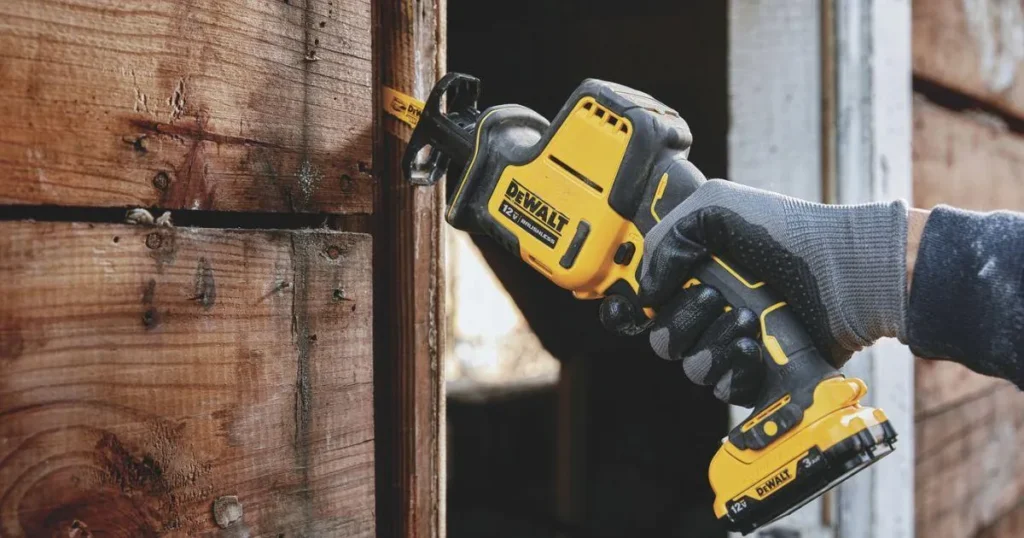
This guide explains the mechanism, blade decisions and operating limits before turning them into buying criteria. It does not replace model-specific instructions or authorize cutting into an unassessed structure.
Decide whether rough cutting and access are the priority
Choose around the required result. Removing a window frame differs from making a visible cabinet joint. A reciprocating saw can reach some locations that bench equipment cannot, but a flexible blade can wander under load.
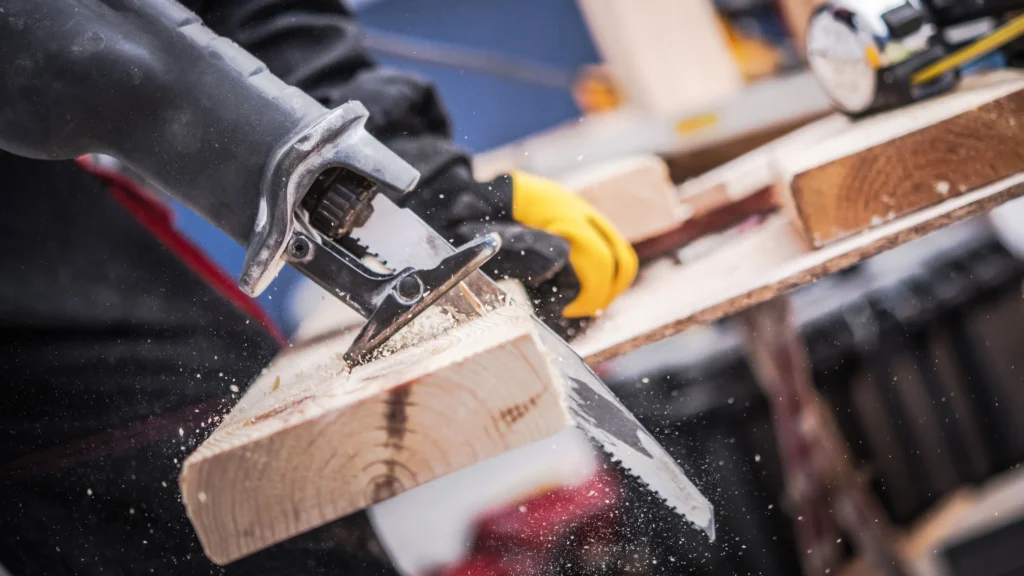
Use our electric saw selection guide if the category remains uncertain. For curves and supported sheet work, the jigsaw versus reciprocating saw comparison addresses a different choice.
- State whether edge appearance and squareness matter.
- Confirm access, support and blade exit space.
- Consider another tool when a controlled finished edge is essential.
Understand stroke, shoe and blade clamp functions
The motor drives a mechanism that converts rotation into reciprocating blade movement. Stroke length describes blade travel; stroke rate describes its repetition. Neither figure alone predicts cutting speed on a particular material.
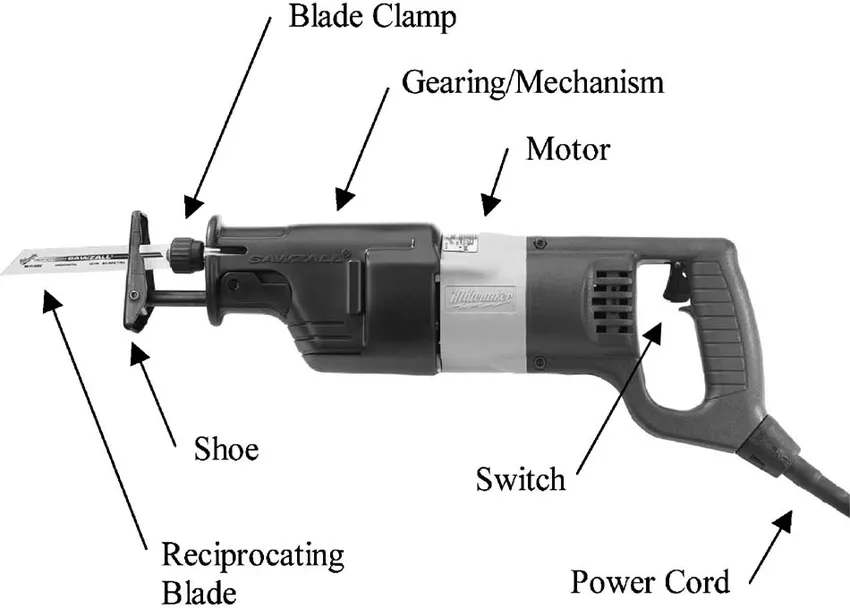
The shoe supports the saw against the work. Some models allow shoe adjustment or pivoting. This does not mean stroke length is adjustable, nor does it make the shoe a precise depth stop.
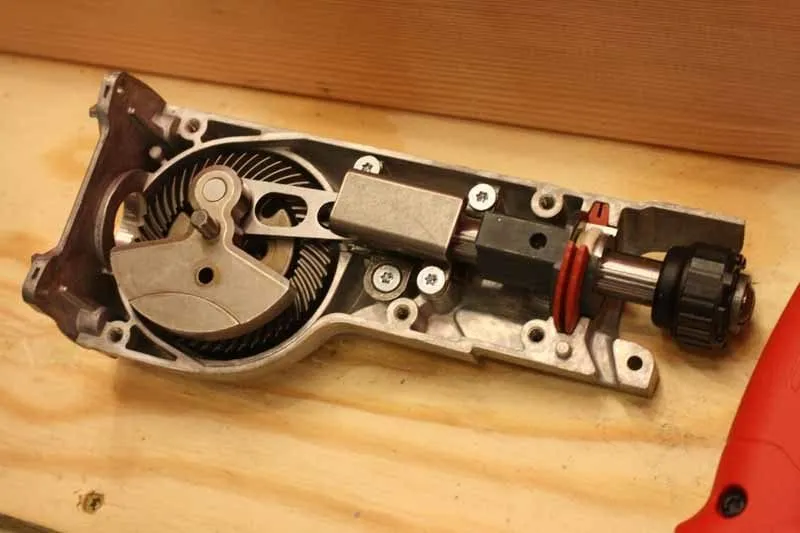
Check controls on the exact model. A blade clamp retains a compatible shank; a trigger may control speed. Orbital action, where provided, changes blade movement and must suit the material and intended cut.
- Identify the approved gripping surfaces.
- Confirm shoe locking and blade-retention procedures.
- Do not copy settings from a different saw.
Select blades by material and thickness
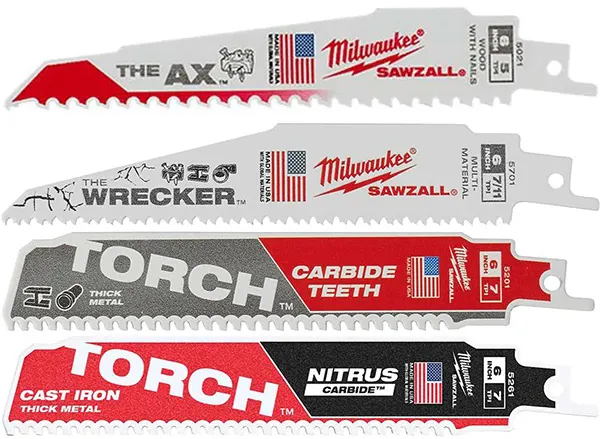
Blade packaging should identify approved materials, thickness ranges and compatible mounting. High-carbon steel, bi-metal and carbide designs serve different applications, but construction labels do not replace those limits.
| Material | Blade selection check | Setup concern |
|---|---|---|
| Clean timber | Approved wood blade and thickness range | Support and remaining clearance |
| Nail-embedded timber | Explicit approval for embedded metal | Hidden services and unexpected fasteners |
| Metal tube or sheet | Alloy and wall-thickness suitability | Clamping, tooth engagement and heat |
| Plastic pipe | Plastic-compatible blade | Movement, heat and edge condition |
| Abrasive or mineral material | Specific saw and blade approval | Dust controls and application limits |
TPI needs a thickness context. Teeth per inch describes tooth spacing. A very coarse pattern can snag thin stock; an unsuitable fine pattern can impede chip removal. Follow the blade maker’s application range instead of a universal metal-versus-wood number.
- Check material and thickness together.
- Reject bent, cracked or damaged blades.
- Do not assume a demolition blade cuts every embedded object.
Check blade length throughout the full stroke
A blade must provide the clearance required by the manual across its whole movement. If its tip retracts into the work and strikes the far side on the next stroke, control can be lost. Extra length also adds exposed reach and potential flex.
Inspect behind the cut. Shoe adjustment cannot prevent a long blade from reaching an unseen pipe or cable. Establish the full travel envelope before starting.
- Check workpiece dimensions and stroke clearance.
- Use an approved blade length for the task.
- Confirm that clamps and supports stay outside blade travel.
For smaller shaped openings, our jigsaw guide explains another tool whose blade clearance and support also need attention.
Prepare demolition and pipe work before powering the saw
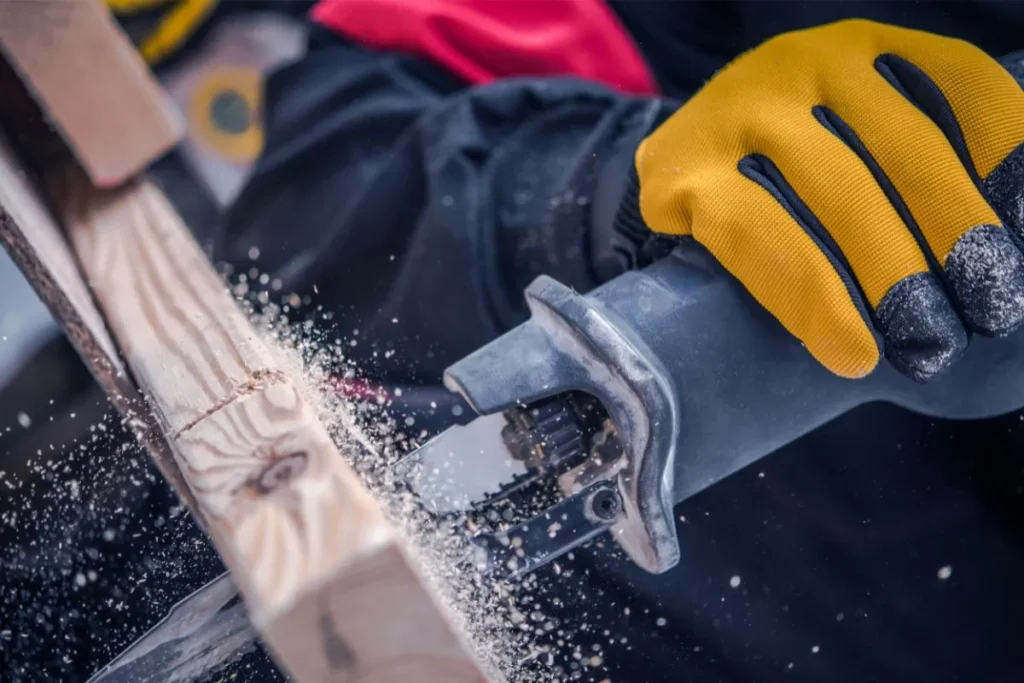
Assess structure, concealed services and hazardous materials before demolition. Pipes must be identified, isolated and made safe by a competent person. Never cut an unknown, pressurized or potentially flammable service because the blade can physically reach it.
Secure material and plan how both the retained piece and offcut will behave. A dropping or moving offcut can pinch a blade or injure someone nearby. Use appropriate eye, hearing and material-specific dust protection.
Plan the last part of the cut. Access at the start does not guarantee support at separation.
- Identify services and isolate them appropriately.
- Keep bystanders outside the work area.
- Use designated grips and stable footing.
Cut metal with controlled support and suitable settings
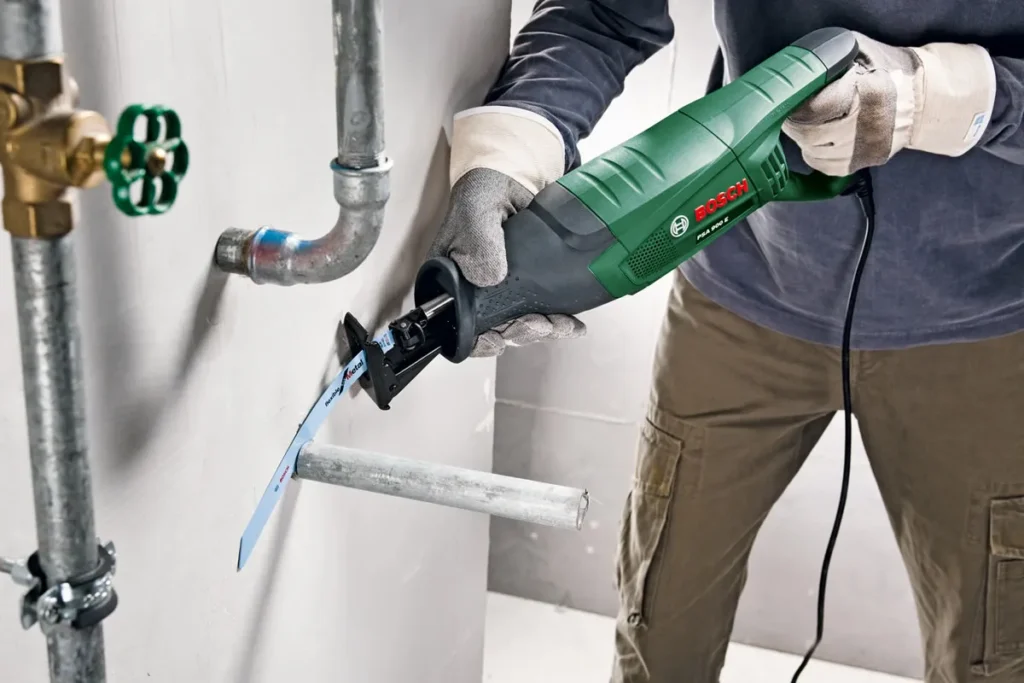
A suitable reciprocating saw can cut metal with an approved blade. Material type and section thickness determine the accessory choice. Thin tubing needs control against snagging; thicker stock demands adequate chip clearance and heat management.
Keep the shoe supported as instructed. Establish the cut under control, maintain suitable feed and use the recommended stroke setting. Do not force the blade sideways to steer a badly aligned cut.
Use lubricant only when approved for the saw, blade, material and working conditions. Treat blades, chips and cut edges as potentially hot and sharp. Metal cutting is not automatically spark-free or suitable near flammable material.
- Clamp and support the section properly.
- Follow instructions for orbital action and speed.
- Stop immediately for binding or abnormal vibration.
If access allows another method, compare a suitable angle grinder setup on cut quality, guarding and spark controls. Neither tool is universally faster or safer.
Keep plunge cuts, flush cuts and pruning within clear limits
Plunge cutting requires explicit model instructions, an approved blade and a known clear cutting path. Do not extend a soft-material plunge technique to metal. Flush cutting likewise requires an approved flexible blade and procedure, not arbitrary bending.
Bosch’s reciprocating saw working advice illustrates why these techniques have material and blade restrictions. Follow your own model’s instructions.
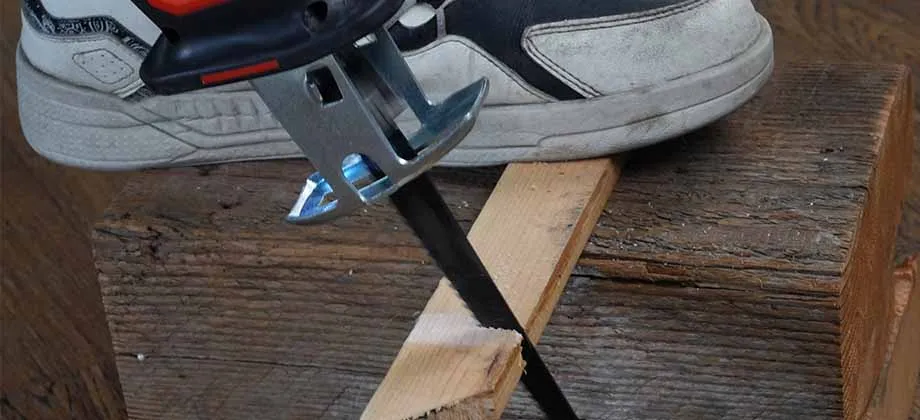
Reach is not a safety plan. Use pruning applications only where the saw and blade permit them, with stable access and manageable branches. A longer blade does not authorize overhead cutting, climbing or cutting stressed limbs.
- Assess what lies behind an internal start.
- Do not use ordinary reciprocating-saw advice for tree felling.
- Choose specialist help for unstable or overhead material.
Compare cordless and corded models using complete setups
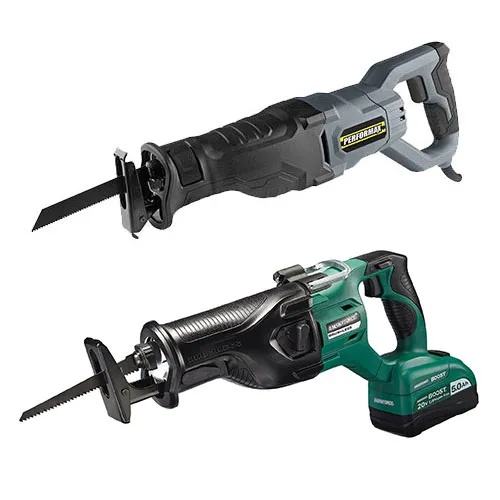
Cordless equipment removes a supply cord from the cut area but requires compatible batteries and charging. Corded equipment avoids battery changes but needs a suitable supply and cable routing. Neither power source proves a universal cutting-capacity advantage.
Check corded site requirements through our voltage selection guide. For cordless comparisons, record battery configuration and completed cuts rather than an unexplained runtime figure.
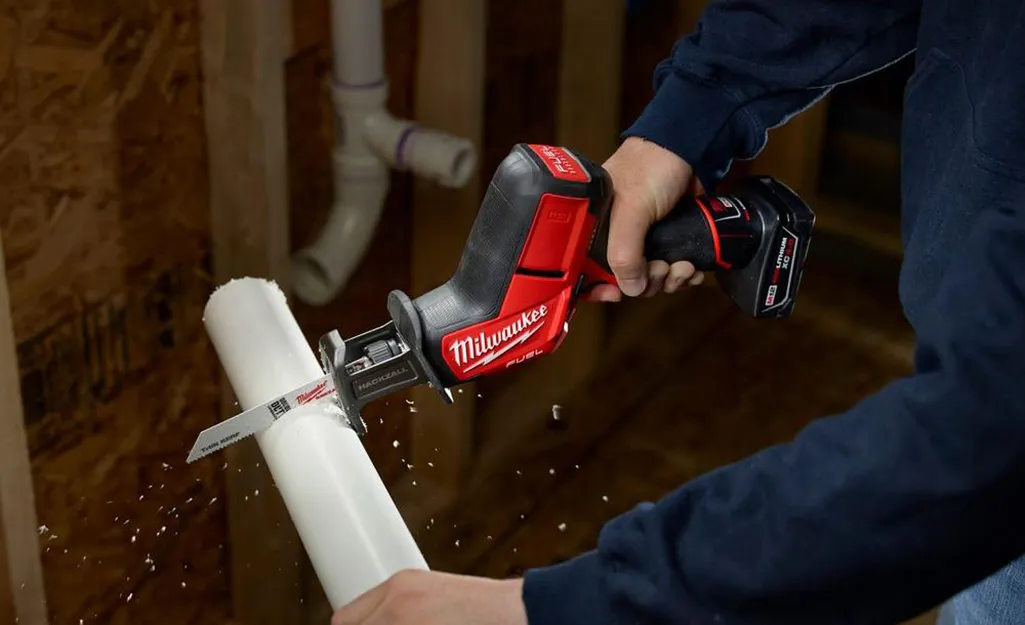
Handle the saw as it will be used. Include the battery and blade. Compact models trade size, stroke and access differently; follow their grip instructions rather than assuming every small saw should be used one-handed.
- Check trigger control and working balance.
- Review noise and vibration information.
- Evaluate brushless motor claims separately from whole-tool performance.
Inspect the blade system before investigating internal faults
Disconnect the supply or remove the battery as instructed before blade changes, adjustment or inspection. Allow hot accessories to cool. Keep cleaning and lubrication within the maintenance instructions; do not improvise internal electrical repairs.
Abnormal behavior is a stop signal. Persistent vibration, unreliable retention or a damaged switch needs service, not a harder grip.
| Symptom | Check after isolation |
|---|---|
| Bouncing or chatter | Work support, shoe contact, blade condition and clearance |
| Slow cutting or overheating | Blade suitability, wear, settings and overload |
| Blade movement in clamp | Compatible shank, correct seating and clamp damage |
| Failure to start | Approved power source and visible damage; use authorized service if unresolved |
- Replace damaged accessories promptly.
- Use the maker’s maintenance schedule.
- Keep tool, battery and blade identification available for support.
Approve a saw range against representative cuts
For distributors, compare samples on actual customer materials and a defined finish requirement. Keep the blade model, battery, settings and support arrangement in the test record. A saw-only comparison hides important differences.
Specify the consumables with the machine. A cordless saw supply brief should include approved blades and kit contents. For customized packaging and instructions, state material limits clearly instead of claiming that one blade cuts everything.
- Test access and control as well as cut time.
- Record blade changes and interruptions.
- Confirm replacement-blade availability and service support.
Frequently asked questions
Can a reciprocating saw cut metal?
Yes, where the model and blade approve the metal and thickness. Correct support, settings and clearance remain essential.
Is it a replacement for a jigsaw?
Not generally. A jigsaw suits supported shaped work; a reciprocating saw often suits access and removal tasks where edge finish matters less.
Does a longer blade cut better?
Not necessarily. It must clear the work throughout the stroke, but unnecessary length can add flex and exposed reach.
Can I plunge cut metal?
Do not apply a soft-material plunge technique to metal. Use an appropriate starting method and follow the exact tool instructions.
How often should I replace a blade?
Replace it when damaged, excessively worn or no longer cutting acceptably. Material and technique prevent a reliable universal lifespan figure.