Choose an angle grinder by its approved application, accessory system, required capacity and working conditions. Disc diameter alone cannot establish usable cutting depth. A larger motor rating also does not prove better control or a longer service life.
For buyers and distributors, the useful comparison is a complete configuration: grinder, guard, accessory, power supply and dust or spark controls. This guide explains what to verify before ordering that configuration.
Define the application before selecting a size
Separate cutting from surface work. Cutting stock, blending a weld and removing a coating impose different accessory and control requirements. An angle grinder is not automatically suitable for every task because an attachment fits.

| Task | Configuration to verify | Possible reason to choose another tool |
|---|---|---|
| Metal cut-off | Approved cutting wheel and cutting guard | Repeated precision cuts or difficult spark control |
| Weld or edge grinding | Approved grinding accessory and guard | Access or finish tolerance |
| Coating or rust removal | Material-compatible stripping or brushing system | Unknown hazardous coating |
| Mineral-material work | Explicit tool approval, accessory and dust controls | Depth, exposure or specialist equipment requirements |
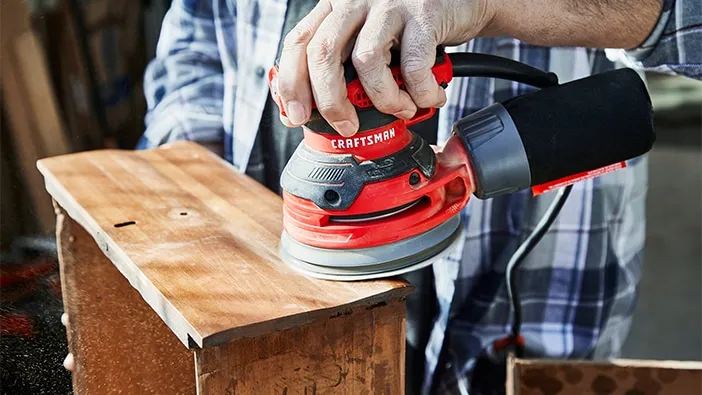
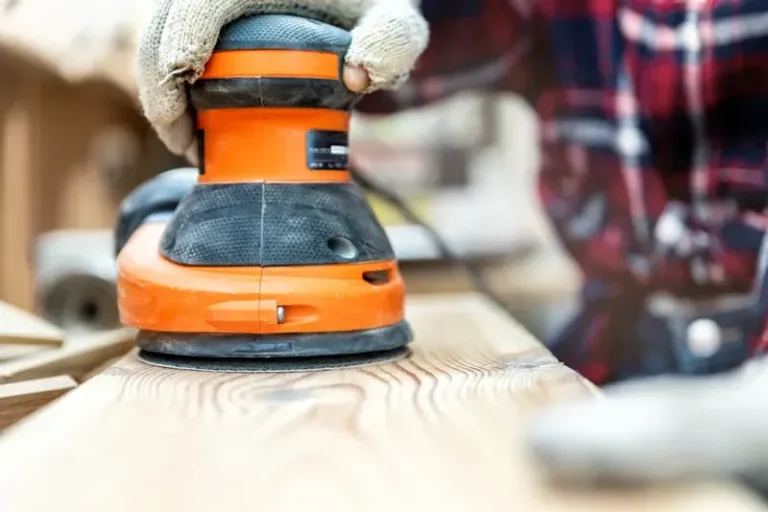
| Fine wood finishing | Consider a dedicated sander instead | Surface preservation and control |
For wood preparation, compare power sander types. For in-place removal cuts, a suitable reciprocating saw may address a different access problem.
- Record material, dimensions and required finish.
- Include workholding and available clearance.
- Reject applications outside the tool’s instructions.
Verify disc diameter and usable cutting capacity
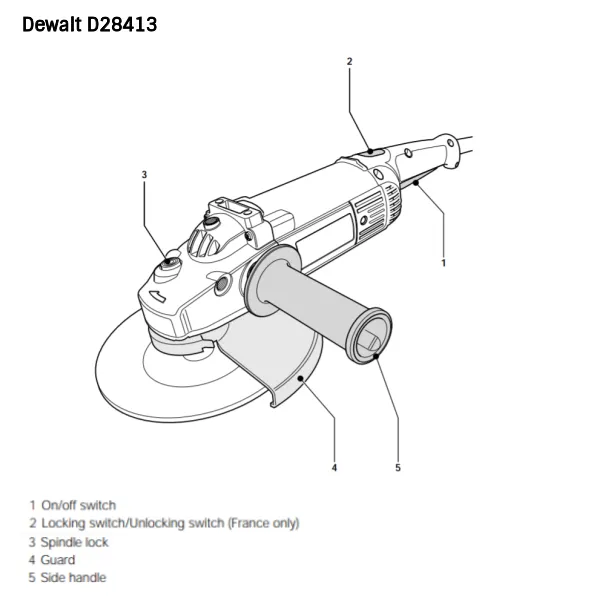
A grinder’s stated disc size describes an approved accessory dimension, not a guaranteed cutting depth. Guard geometry, mounting hardware, wheel wear and workpiece shape affect access. Read the model’s capacity information where supplied.
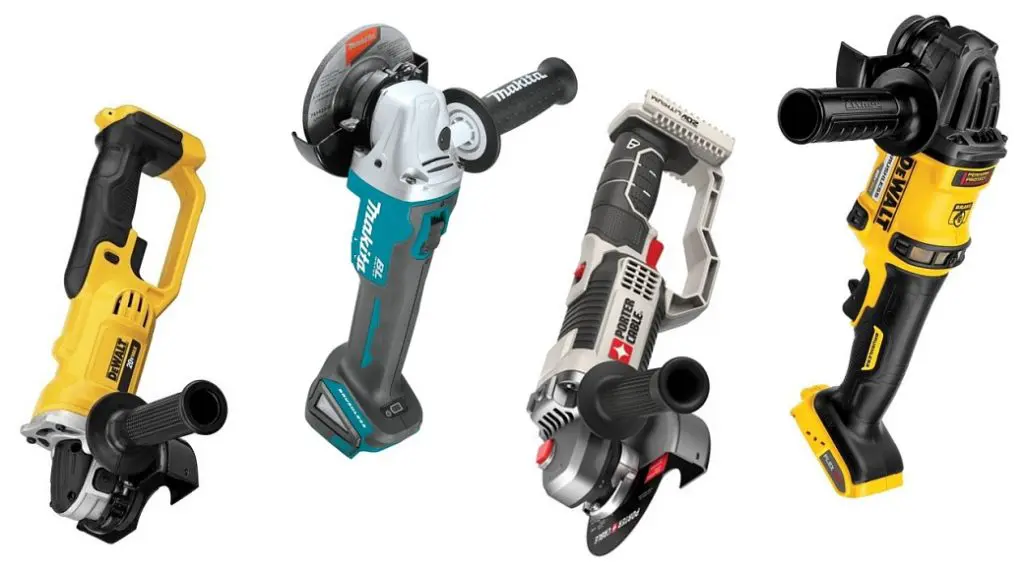
Do not enlarge capacity by changing the guard. Never remove a guard or fit an oversized wheel to reach deeper. Do not transfer a partly worn large wheel to a smaller, faster grinder unless explicitly approved.
- Confirm approved diameter and thickness limits.
- Check actual access with the complete guarded setup.
- Choose purpose-designed cutting equipment when capacity is insufficient.
Our angle grinder component guide explains the spindle, mounting hardware and guard as separate parts of that check.
Match the accessory, mounting system and speed rating
Verify application approval, dimensions, mounting interface and speed rating together. Threaded mounts, bore-and-flange arrangements and proprietary quick-change systems are not interchangeable by appearance.
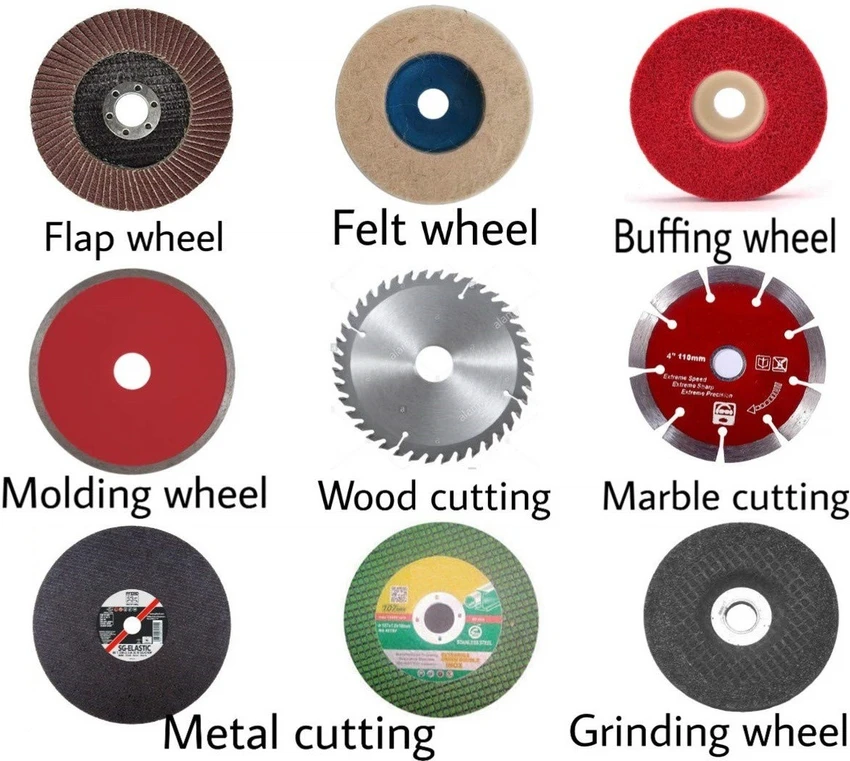
A lower dial setting does not cure incompatibility. Follow the grinder and accessory makers’ speed requirements. The accessory’s maximum RPM rating must meet the tool’s required rating; do not assume you can safely use a lower-rated wheel by remembering a setting.
Thin cut-off wheels are not intended for side grinding. Grinding, flap, wire and polishing accessories each have their own limits. Check specified materials rather than assuming every diamond wheel cuts metal or every wire brush preserves the underlying surface.
- Inspect markings and condition before use.
- Use approved flanges and mounting instructions.
- Do not drill out a bore or improvise an adapter.
Read power and speed figures without inventing a ranking
Input wattage is not identical to useful output at the accessory. Battery voltage does not by itself describe motor power. RPM states rotational speed, not cut quality or material-removal rate.
Variable speed may support approved speed-sensitive applications. Constant-speed control is a different function, intended to regulate speed under changing load. Neither feature removes accessory restrictions or guarantees a cool, mark-free surface.
Compare acceptable work completed. Use the same material and suitable equivalent accessories, then record cut quality, removal rate and interruptions. Do not rank models only by their largest printed number.
- Distinguish input ratings from output claims.
- Record test conditions with performance figures.
- Investigate repeated overload rather than bypassing protection.
Choose corded, cordless or pneumatic around the workplace
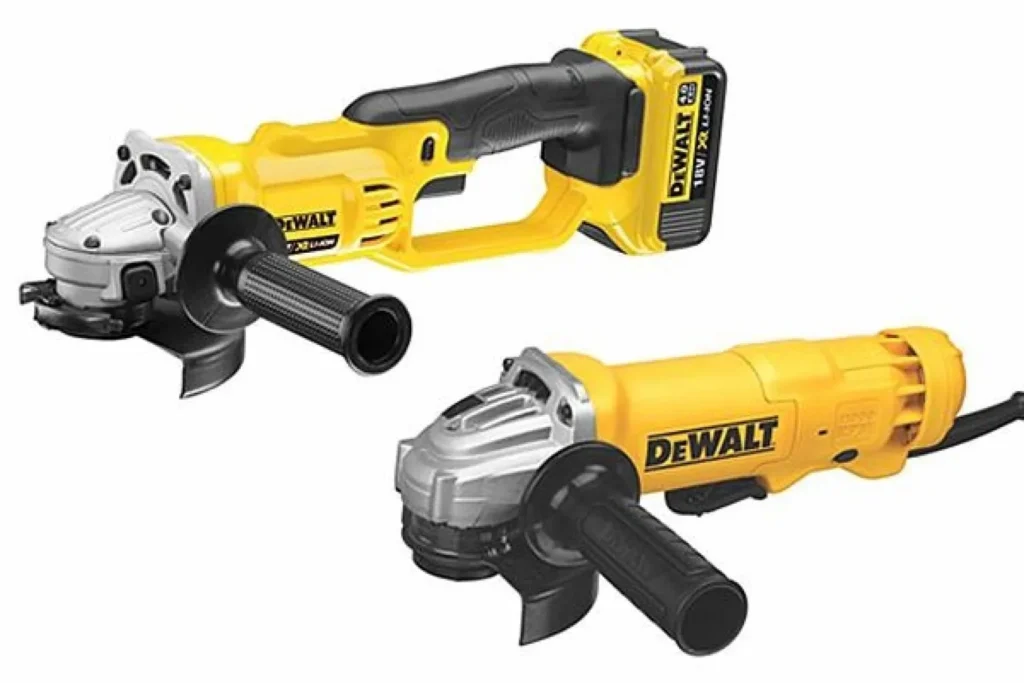
Corded equipment needs a suitable supply and cable plan. It avoids depleted batteries but still has thermal and operating limits. “Unlimited runtime” is not a promise of continuous duty without interruption.
Cordless equipment removes a supply cord from the immediate task but needs compatible packs and charging capacity. Compare working weight with the actual battery installed. Pneumatic equipment requires the specified air supply and is not automatically safe in wet or flammable environments.
Check infrastructure before the purchase price. Our corded-tool voltage guide covers supply questions. Follow exact model and site requirements.
- Include charging or air-supply equipment in cost comparisons.
- Plan cable or hose routing.
- Measure useful work per charge under a defined load.
Separate protective functions instead of calling everything a brake
A constant-pressure switch stops supplying power when released; it does not inherently detect both hands. A brake reduces run-down time. Restart protection addresses specified restart conditions. Anti-kickback or overload systems have different triggering behavior.
Ask what the feature actually does. Obtain the model description and limitations. Electronics cannot guarantee that a wheel will never bind or that a tool will never move suddenly.
| Feature | Question to ask |
|---|---|
| Guard | Which accessory types and operations does it cover? |
| Switch and lock arrangement | What action starts and stops power? |
| Brake | What run-down behavior is documented for the configuration? |
| Restart protection | Under which interruptions does it operate? |
| Overload or kickback response | What does the manual say it detects and cannot prevent? |
- Confirm features on the exact SKU.
- Do not equate a switch release with instant wheel stoppage.
- Keep guards and handles fitted as instructed.
Plan dust, sparks and protective equipment by material

Metal work can throw sparks and hot fragments. Mineral-material work can produce hazardous fine dust. Unknown coatings need assessment before removal. These are different problems and should not be reduced to a single “wear a mask” instruction.
HSE’s concrete grinding guidance describes the need for effective on-tool extraction and appropriate respiratory protection. Select controls for local requirements and the actual task.
Keep incompatible hazards out of one setup. Do not send metal sparks into a collection system containing combustible wood dust. Do not add water or coolant to a conventional dry-use grinder.
- Assess fire and exposure risks before work.
- Provide suitable eye and face, hearing, hand and respiratory protection.
- Include nearby workers and safe cleanup in the plan.
Check handling with the guarded working configuration
Grip size, side-handle position, switch access and balance affect usable control. Evaluate those with the required guard, accessory and battery or cord fitted. A lighter bare tool may not remain lighter in its working configuration.
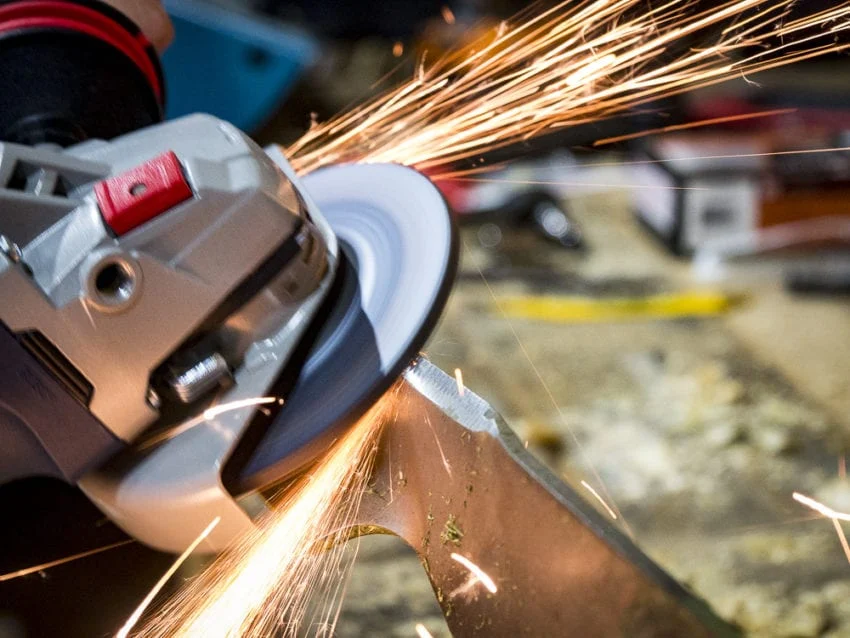
Small size does not authorize one-handed use. Follow the designated two-handed grip and maintain stable footing. Plan work support so an offcut cannot close the kerf and trap the wheel.
- Check whether controls can be operated without losing grip.
- Review vibration and noise information for exposure planning.
- Use a suitable work platform rather than relying on cordless portability at height.
CCOHS provides further portable grinder safety guidance. Training and the model manual remain necessary.
Evaluate maintenance and service before buying a range
Wheel condition, cooling paths, guards, handles and power connections need routine inspection. Isolate the supply before accessory changes or maintenance. Use the prescribed mounting procedure and inspect accessories according to their manufacturer’s instructions.
Brushless construction removes brush replacement but does not make a grinder maintenance-free. The brushless motor guide explains that trade-off; our brushed motor overview covers the alternative.
Ask for the repair route. Confirm available replacement guards, handles and service parts. A warranty statement alone does not explain repair access or turnaround.
- Record model and accessory identification.
- Quarantine damaged equipment.
- Follow model-specific intervals instead of a universal hours-between-services table.
Send a complete application brief for sample approval
For a cordless grinder supply inquiry, describe common materials, cutting or grinding tasks, working conditions and expected duty. Include accessory and guard requirements before comparing quotations.
Approve the configuration, not just the machine. Keep a sample record of acceptable finish, work completed, accessory wear and interruptions. For private-label packaging, ensure the advertised uses match that approved configuration.
- Verify model-specific documents and instructions.
- Test representative work without exceeding rated limits.
- Confirm kit contents, replacement accessories and support responsibilities.
Frequently asked questions
Does disc diameter equal cutting depth?
No. Usable depth also depends on mounting, guarding, wear and access. Verify the exact model and setup.
Can a paddle switch detect both hands?
Do not assume so. A typical constant-pressure switch responds to pressure on that switch; it does not prove correct two-handed grip.
Can I add water while cutting concrete?
Not to a conventional dry-use grinder. Wet cutting needs purpose-designed, approved equipment and procedures.
Is cordless always less powerful?
No universal ranking applies. Compare complete models and battery configurations on the same approved task.
Can I fit a different-sized disc if it physically mounts?
Physical fit is insufficient. Use only approved dimensions, mounting, guard and speed combinations.