Choose a power sander by surface shape, required material removal and finishing method. A random-orbit sander often suits accessible wood panels; a belt sander serves heavier stock removal. Corners, profiles and floors require separate consideration.
Motor rating alone cannot tell you whether a machine will produce an acceptable surface. Pad motion, abrasives, extraction and handling work together. This guide compares those choices without assuming one sander can cover every project.
Define the surface before choosing a sanding action
Start with what must remain. Removing a deep defect from solid timber differs from scuffing a thin veneer or cured coating. Establish allowable material removal before choosing an aggressive tool.
| Surface or task | Possible starting tool | Limitation to investigate |
|---|---|---|
| Broad wood panel | Random-orbit or orbital sheet sander | Scratch quality and edge control |
| Heavy stock removal on suitable solid wood | Belt sander | Flatness and gouging risk |
| Inside corner or narrow area | Detail sander or hand block | Pad access and loss of profile |
| Floor refinishing | Appropriate floor-sanding system | Wear layer, condition and operator competence |
| Drywall or other specialist material | Purpose-designed system | Material approval and dust controls |
Not every part of a job should be power-sanded. Our power versus hand sanding guide covers vulnerable edges and areas where manual work offers better control.
- Identify substrate and any existing coating.
- Separate flat areas from profiles and corners.
- Define a sample finish that shows acceptable results.
Distinguish orbital, random-orbit and rotary motion
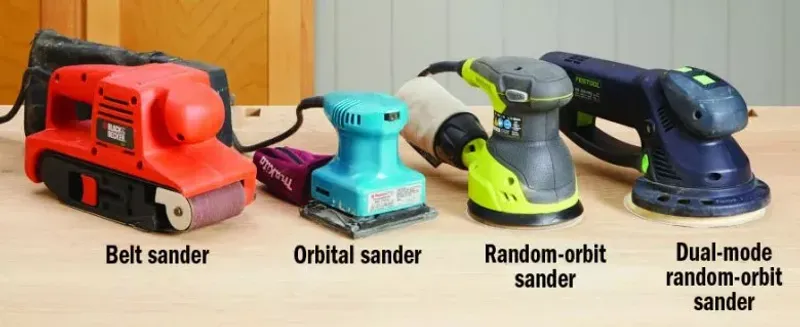
An orbital sheet sander moves its pad through small orbits. A random-orbit design combines orbital movement with pad rotation. A purely rotary sander rotates its abrasive around a central axis.
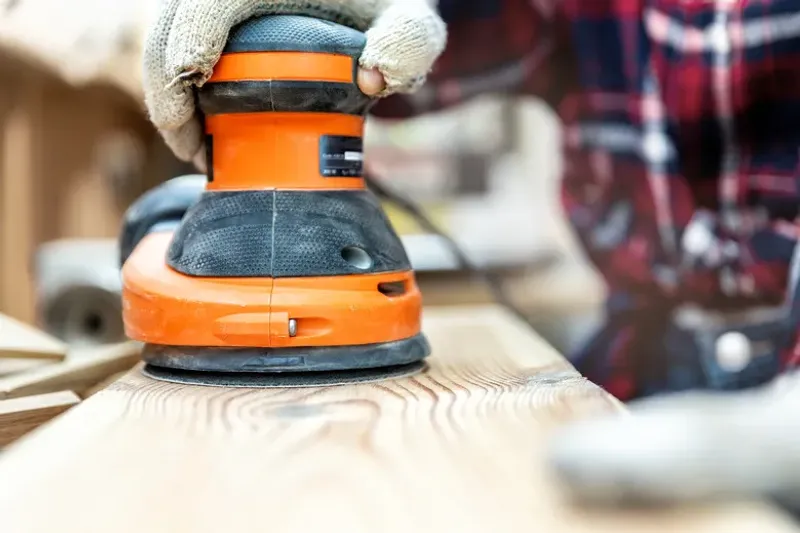
Random-orbit motion reduces repetitive scratch patterns, but does not guarantee a swirl-free finish. Contaminated abrasives, poor extraction, excess pressure or unsuitable grit can still leave marks. A quarter-sheet orbital sander is not simply a square version of a random-orbit machine.
Compare motion before comparing pad size. Two machines with similar dimensions can remove material differently. “Palm sander” describes a handling format, not one precise sanding mechanism.
- Check the actual pad movement.
- Ask whether rotation is free or driven where relevant.
- Inspect a finished test area under useful lighting.
Use belt sanders for appropriate stock removal
A belt sander moves a continuous abrasive loop across a platen and rollers. Handheld and stationary designs serve different handling needs. Belt dimensions describe accessory fit, not a beginner-to-expert ranking.
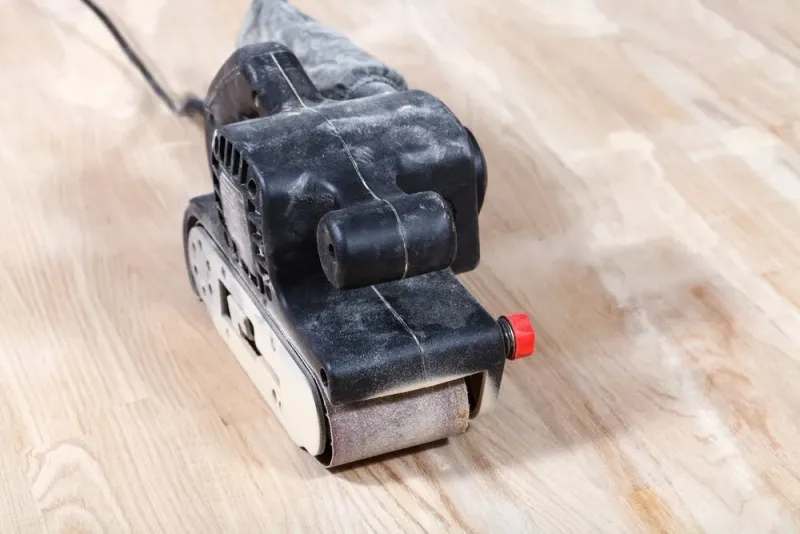
Keep stock removal deliberate. An aggressive belt can create a low spot faster than a finishing sander. Follow the operating instructions for workholding, contact and travel; avoid using sanding as a substitute for every cutting or flattening operation.
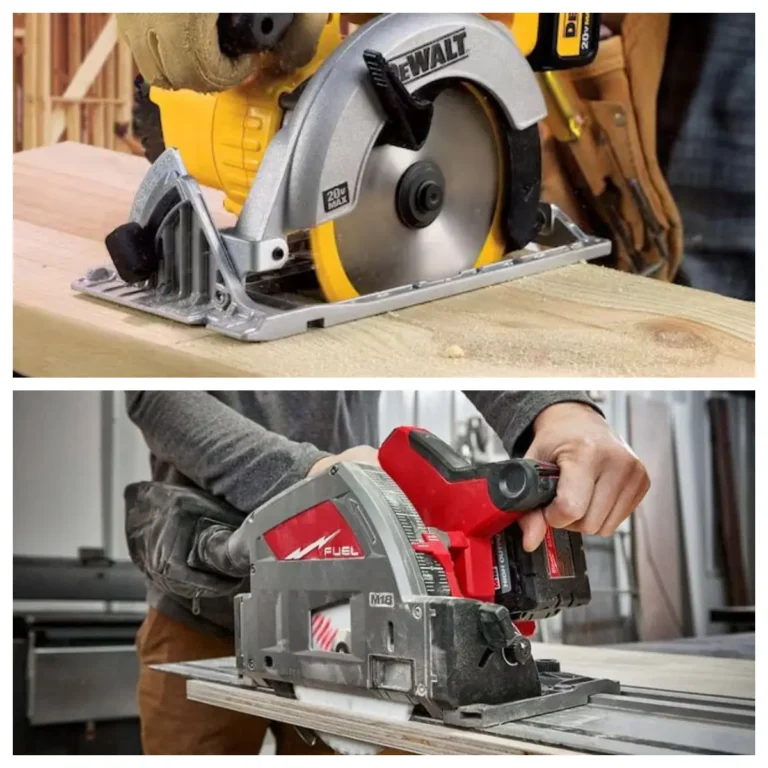
If a panel still needs sizing, complete the appropriate cutting stage first. Our plunge and circular saw comparison covers that separate decision.
- Confirm material thickness and allowable removal.
- Check belt tracking and the condition of the platen.
- Test flatness rather than judging only by surface smoothness.
Choose detail tools around access and profile preservation
Triangular pads can reach certain inside corners that a round pad cannot. They do not automatically fit every molding or carving. A rigid pad can flatten a curved profile or round an edge if contact is poorly controlled.
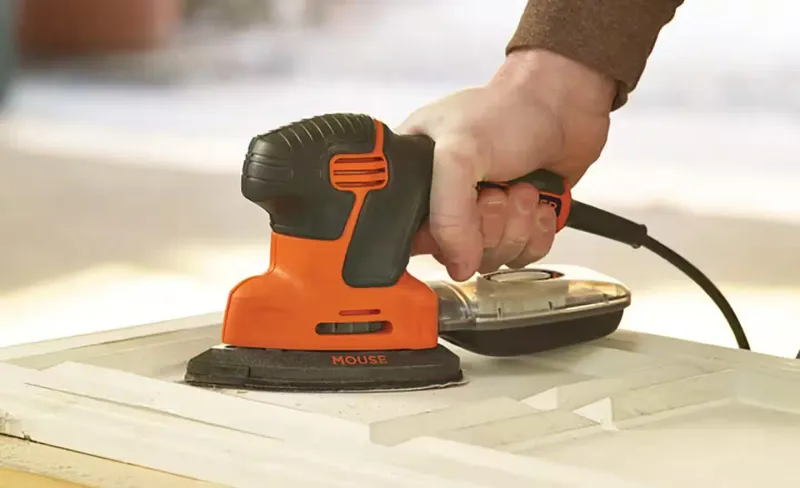
Check the contact patch. Select a pad, attachment or hand block that supports the required shape. Small abrasive areas wear quickly if pressure concentrates at the tip.
An oscillating multi-tool may accept a sanding attachment where approved. The multi-tool accessory guide helps distinguish accessory functions; physical attachment alone does not establish material suitability.
- Test clearance without running the machine.
- Inspect edges and decorative details frequently.
- Change methods when a powered pad cannot preserve the profile.
Treat floor and specialist sanders as separate systems
Floor drum sanders differ from benchtop drum sanders used for boards. Neither name describes every machine in that category. A floor’s remaining wear layer, construction and condition determine whether refinishing is appropriate.
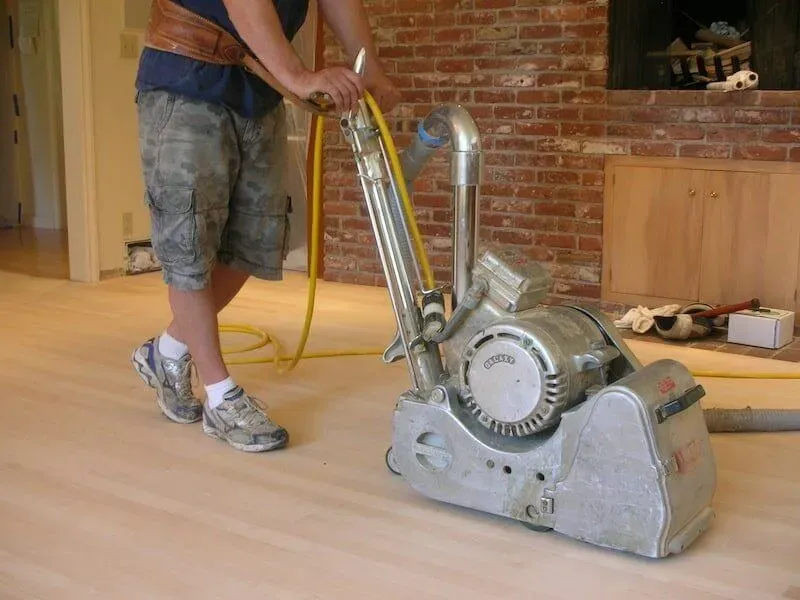
Drywall, metal and mineral surfaces introduce different abrasive and dust requirements. Do not move a wood-dust extraction setup into spark-producing metal work without explicit equipment approval and a suitable risk assessment.
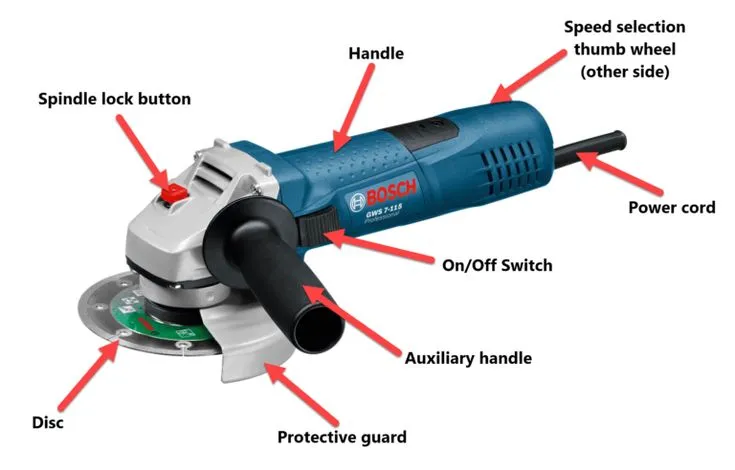
Do not improvise across material categories. An angle grinder with an accessory is not automatically a substitute for a finishing sander. See our angle grinder selection guide when grinding is actually required.
- Verify machine and abrasive approval for the material.
- Obtain instruction for unfamiliar floor equipment.
- Assess unknown coatings before creating dust.
Match abrasives, pad and speed to the finish
Abrasive type, backing, grit and attachment must match both tool and material. Align extraction holes where the system requires it. A disc that overhangs, slips or blocks airflow compromises more than convenience.
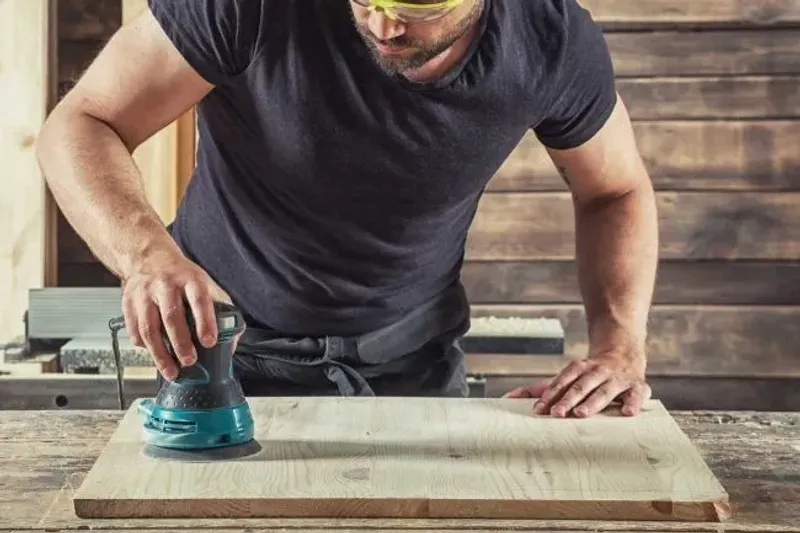
Choose the next grit by the remaining scratches. There is no universal sequence for every wood, coating or finish. Follow abrasive and coating guidance, then confirm with a sample. Moving finer too early can leave coarse defects visible beneath the finish.
- Use the least aggressive starting point that completes the task.
- Clean and inspect between stages.
- Stop if heat, clogging or surface damage develops.
Variable speed provides adjustment, not a guarantee that minimum speed always produces the best finish. Motion, pressure and abrasive condition still matter.
Evaluate extraction as part of the purchase
A dust bag does not prove adequate exposure control. Check the complete system: pickup path, pad, hose, connections, extractor and maintenance. Select controls for the material and working conditions, with suitable respiratory protection where required.
HSE’s wood sanding guidance explains why extraction and exposure assessment belong in work planning. Follow applicable local requirements rather than assuming any domestic vacuum is suitable.
Test with extraction connected. Hose stiffness and routing can affect handling. A sander that feels balanced on a counter may behave differently with its working connections attached.
- Check compatible connections and filter requirements.
- Inspect hoses, seals and abrasive-hole alignment.
- Follow safe collection and disposal instructions for the dust produced.
Compare working weight, power supply and controls
Cordless sanders remove a supply cable but still need a battery and charging plan. A dust hose may remain attached. Corded models need a suitable electrical supply and safe cable routing.
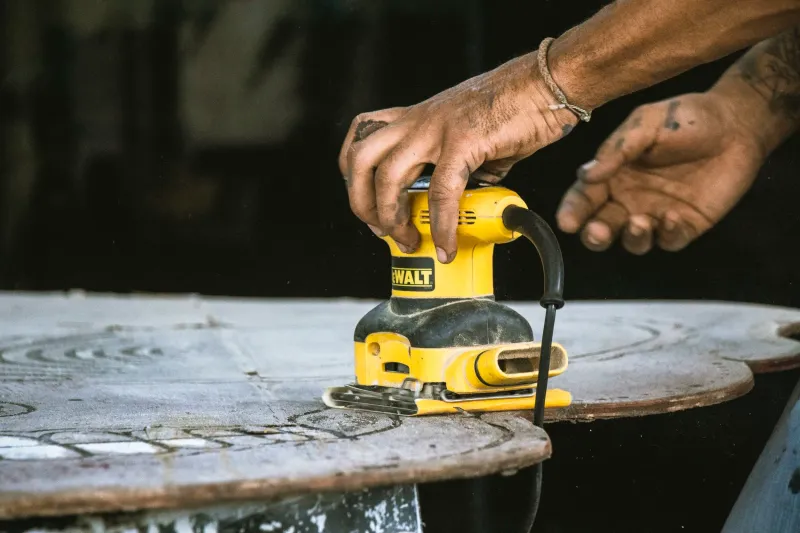
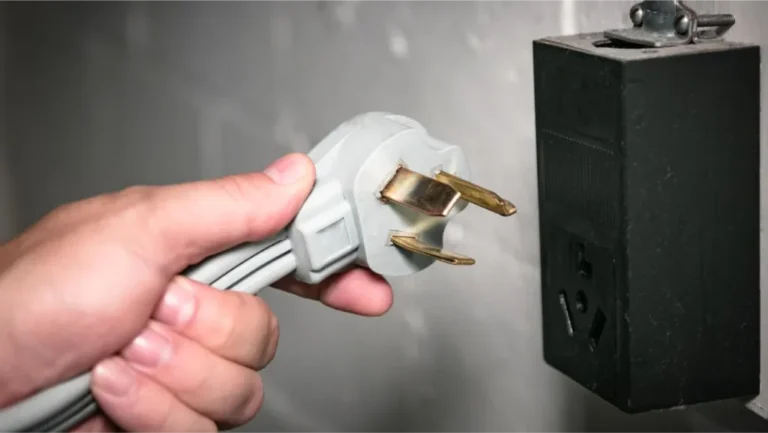
For corded selections, verify the site’s supply through our power-tool voltage guide and the exact equipment instructions. Plug shape alone is not a compatibility check.
Hold the complete working configuration. Check switch access, grip, balance and vibration information. Brushless construction may offer benefits, but the motor type does not establish whole-tool comfort or runtime.
- Include the intended battery and extraction hose.
- Review noise and vibration information for work planning.
- Check replacement pad and abrasive availability.
Build a sample test around visible finish quality
Use matching material, abrasive condition and finishing criteria when comparing candidates. Record time and consumables only alongside the quality achieved. A faster process that creates rework may be a poor purchase.
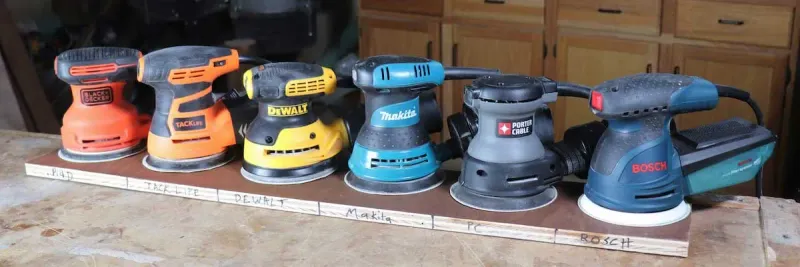
Keep a reference panel. It makes later sample approvals more consistent than words such as “smooth” or “professional finish.”
| Record | What it reveals |
|---|---|
| Material, coating and starting condition | Whether comparisons use equivalent work |
| Abrasive, speed, pad and extraction setup | Whether the result can be reproduced |
| Scratches, flatness and edge condition | Whether the surface meets the brief |
| Working time, consumables and interruptions | Practical cost of an acceptable finish |
- Inspect under consistent lighting.
- Include awkward edges, not only an easy central area.
- Confirm the next coating accepts the prepared surface.
Choose a range with distinct applications
A distributor does not need several near-identical models with indistinguishable claims. Define roles: broad-panel preparation, corner access, heavier removal or specialist work. Include the abrasives, pads and extraction accessories required for each role.
Make acceptance criteria part of the inquiry. For a cordless tool sourcing project, specify intended material, approved finish sample, kit configuration and service expectations.
For private-label packaging and manuals, identify the approved abrasive sizes and extraction accessories clearly. Customers should not have to infer compatibility from a product photograph.
- Approve samples before finalizing marketing claims.
- Confirm consumable and spare-pad supply.
- Select on finished work, not an isolated speed or power figure.
Frequently asked questions
Will a random-orbit sander eliminate swirl marks?
No. Its motion reduces repetitive patterns, but abrasive contamination, technique and extraction can still affect scratch quality.
Is a quarter-sheet sander a random-orbit sander?
Generally, a quarter-sheet design uses orbital pad movement without the freely rotating round pad of a typical random-orbit machine. Check model specifications.
Can I use one sander for wood and metal?
Only with explicit machine and accessory approval, plus suitable dust and spark controls. Do not assume a shared extraction system is appropriate.
What grit should I finish with?
Follow the material, abrasive and coating requirements. Test a sample; no single final grit suits every finish.
Should I buy corded or cordless?
Compare supply access, working weight, charging needs and extraction routing. Use the complete working setup for your decision.