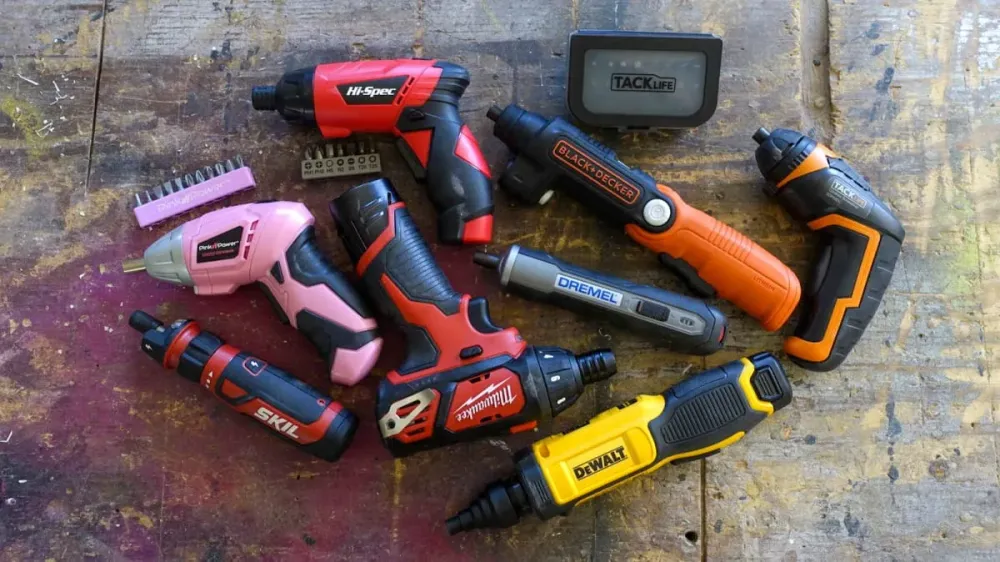
The best cordless screwdriver fits your fasteners, available space and required control. For furniture hardware, a compact tool with manageable speed can be more useful than extra torque. Larger construction screws may require a drill-driver or impact driver instead.
Start with a sample joint, not a voltage target. This guide explains how to compare compact screwdrivers, test clutch behavior and plan charging. For distributors, those checks also help define a range customers can choose without guesswork.
Match the tool category to the fastening job
Small screws reward control. A cordless screwdriver mainly rotates a driver bit. A drill-driver also accepts drilling accessories through its chuck. An impact driver adds rotational impacts for suitable fastening work.
| Job | Starting choice | Check first |
|---|---|---|
| Furniture fittings and small screws | Compact screwdriver or manual driver | Low-speed control and seating behavior |
| Pilot holes followed by fastening | Drill-driver | Chuck capacity, drilling mode and clutch |
| Repeated larger screws | Suitable drill-driver or impact driver | Fastener approval, material and rated capacity |
| Delicate electronics | Appropriate precision tool | Fastener size and specified tightening method |
Our manual versus power screwdriver comparison covers jobs where hand control remains useful. For heavier work, compare drills and impact drivers before buying a larger screwdriver.
- List screw sizes, materials and access constraints.
- Separate routine assembly from occasional heavy work.
- Check the model’s intended use rather than its category name alone.
Test the clutch on a representative joint
An adjustable clutch limits transmitted torque at a selected setting. Not every compact screwdriver includes one. Numbered positions usually indicate relative settings, not calibrated torque values in newton metres.
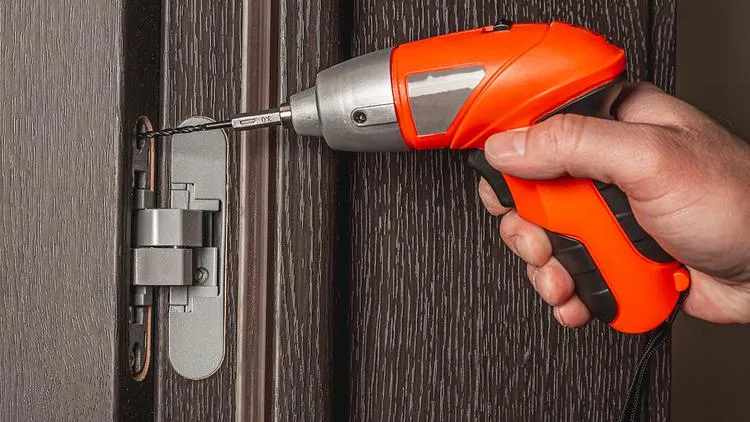
Check where the screw stops. Begin conservatively on suitable test material, following the manual. Increase only as necessary for correct seating. The same setting can behave differently with another screw, pilot hole or substrate.
A clutch cannot guarantee damage-free fastening. Thin fittings, worn recesses and weak material can fail before a poorly chosen setting releases. Assemblies with a specified final torque need an appropriate controlled tightening method and verification.
- Inspect seating depth and material damage.
- Repeat the test on comparable joints.
- Record tool mode and setting with the approved sample.
Judge speed by starting and stopping control
A maximum no-load speed says little about how gently a tool starts a short screw. Compare trigger travel, low-speed behavior and stopping response. Some compact models have a simple on/off control rather than a variable-speed trigger.
Watch the final turns. A tool that starts smoothly but is difficult to stop can still overdrive a fitting. Keep the bit aligned, establish engagement and reduce speed as the screw approaches its seat.
- Test forward and reverse controls with your normal grip.
- Check whether mode selection stays clear in confined work.
- Follow any manual requirement for stopping before changing direction.
If your work genuinely needs repeated impact fastening, use our impact driver setup guide. A compact screwdriver does not acquire that mechanism simply because its torque rating looks high.
Choose voltage and motor type without assuming performance
Voltage describes an electrical characteristic of a battery system. It does not establish finished-tool torque, speed control, runtime or durability by itself. A low-voltage compact screwdriver can be entirely appropriate for light assembly.
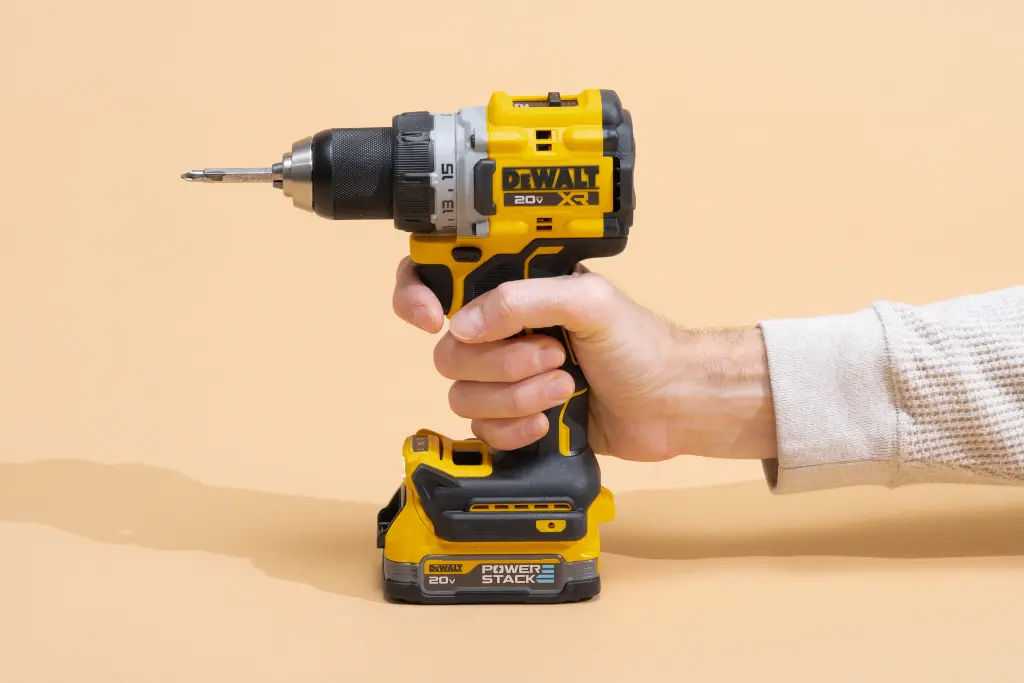
Brushless construction removes the brush-and-commutator arrangement, but its practical benefit depends on motor design, electronics and workload. Our brushless motor explanation separates that mechanism from whole-tool claims.
Compare completed work, not labels. A compact brushed model may still meet an occasional assembly brief. Read the brushed motor overview if maintenance and purchase cost are part of your decision.
- Use the same fastener and material for comparisons.
- Record the battery configuration where removable packs are used.
- Reject universal runtime or lifespan promises without a stated test.
Plan charging around the way you work
Integrated batteries can keep a tool compact; removable packs allow a depleted pack to be exchanged where supported. Neither design establishes charging speed or serviceability on its own. Confirm those details for the exact model.
For a removable system, check approved tool, battery and charger combinations. A physically similar connector or matching voltage does not prove compatibility. For USB charging, follow specified supply requirements; connector shape alone does not describe charging performance.
Measure a useful work cycle. Count comparable completed fastenings rather than quoting an unexplained number of hours. Include idle periods, charge time and any temperature-related interruption.
- Check what charging equipment is included.
- Follow storage and charging temperatures in the instructions.
- Ask how an integrated battery is serviced at end of life.
Check bit fit, retention and reach
A bit must match the screw recess in both type and size. Similar-looking recesses are not necessarily interchangeable. Worn or poorly fitting bits encourage slipping and damage even when the tool is otherwise suitable.
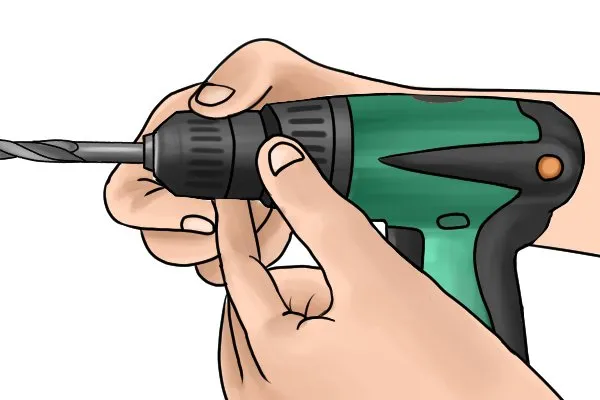
Fit the accessory before judging access. A short tool with a long holder may no longer fit inside a cabinet. Check retention, permitted shank dimensions and any approved offset or right-angle attachment.
- Verify bit engagement without powering the tool.
- Follow the manual’s isolation procedure before accessory changes.
- Use only approved attachments and account for changed reach or handling.
Evaluate grip and balance in the actual working position
Inline, pistol-grip and adjustable-handle designs place the wrist differently. One shape may suit a straight-on screw while another provides access beside a panel. Test the position you will actually use.
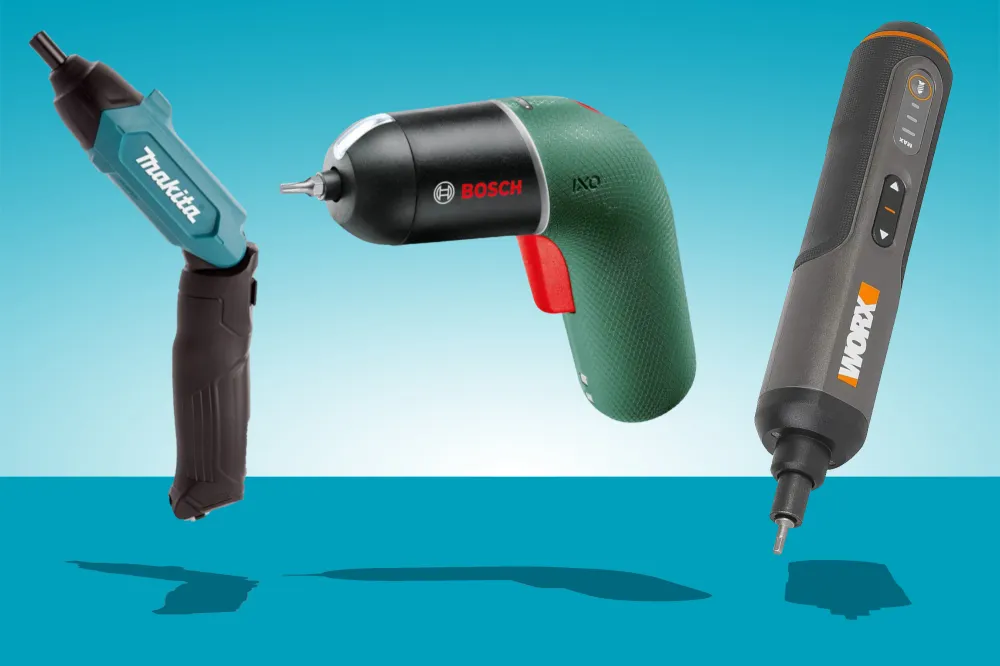
Reach matters more than a display pose. Include the bit, attachment and battery in the handling test. Confirm that the light illuminates the recess rather than casting a shadow exactly where engagement matters.
- Check grip size and control reach.
- Assess balance during overhead or confined work.
- Do not infer fatigue reduction from weight alone.
Inspect safety, maintenance and support provisions
Read the model’s instructions before use. Secure loose work, keep hands away from rotating parts and check for concealed services before fastening into walls. Stop using equipment with damaged housings, charging faults or abnormal heat.
Cleaning and lubrication requirements vary. Do not pour oil into a sealed tool or open an integrated battery to improvise a repair. Use the maker’s service route and applicable battery collection arrangements.
Ask what happens after a fault. Warranty length alone does not establish coverage. Confirm exclusions, purchase evidence, repair location and availability of parts or replacement equipment.
- Check exact model identification on instructions and product.
- Review market-specific documentation with an appropriate specialist.
- Do not treat a logo on packaging as proof of every safety or performance claim.
Compare kits using a consistent sample record

A low bare-tool price may exclude essential charging equipment or useful bits. Conversely, a large accessory count may add little value if sizes do not match customer fasteners.
Write down what each price includes. Compare equivalent kits and record assembly results before choosing a range.
| Evaluation item | Record | Reason |
|---|---|---|
| Sample joint | Material, fastener and pilot preparation | Makes results comparable |
| Control | Starting, stopping and clutch behavior | Reveals assembly suitability |
| Working configuration | Tool, bit, attachment and battery | Captures access and balance |
| Kit and support | Charger, accessories, instructions and service route | Exposes missing purchase requirements |
For sourcing decisions, our Chinese power tool buying guide explains why market support and exact model evidence deserve separate checks.
Specify a compact screwdriver that has a clear role
A useful brief names the fastening task, required control, access constraints and supplied kit. It does not ask for maximum voltage, minimum weight and longest runtime without explaining which trade-offs matter.
Send a joint specification with the inquiry. When discussing a cordless tool supply project, include representative fasteners and materials. For private-label customization, keep packaging and branding requirements separate from performance acceptance.
- Approve a sample against documented criteria.
- Confirm exactly which controls and accessories are included.
- Choose a heavier tool category when the task exceeds compact-screwdriver capacity.
Frequently asked questions
Is a higher-voltage screwdriver always better?
No. Control, fit and task capacity matter more than voltage alone. A compact model may suit small assembly work better.
Does every cordless screwdriver have a clutch?
No. Check the exact model. Some use fixed output, electronic modes or other controls instead of an adjustable clutch.
Can it drill holes?
Only where the manufacturer permits drilling with compatible accessories. A drill-driver is generally the clearer choice for regular hole-making.
Can a clutch guarantee an exact tightening torque?
Do not assume so. Numbered settings are usually relative; specified assembly torque needs an appropriate controlled and verified process.
Should I buy an integrated or removable battery?
Choose around access, work cycles, charging and service arrangements. Neither design is automatically best for every user.