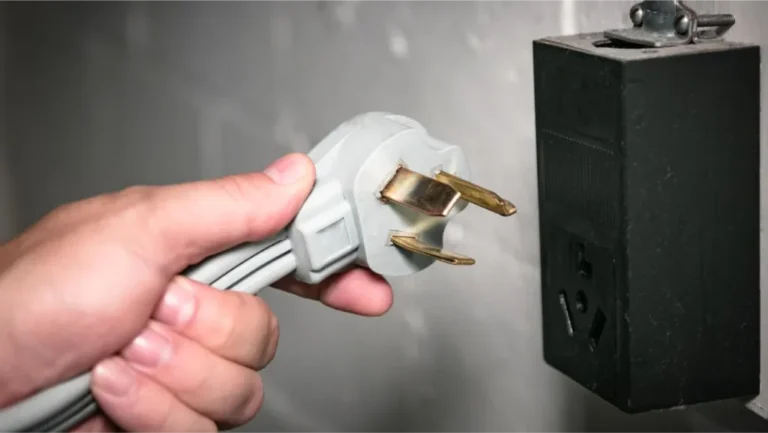
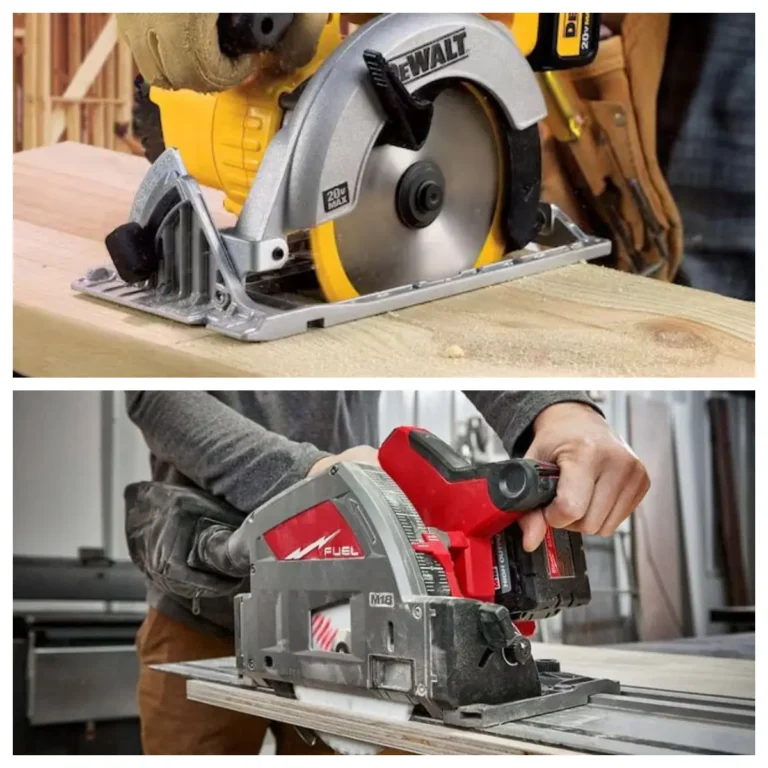
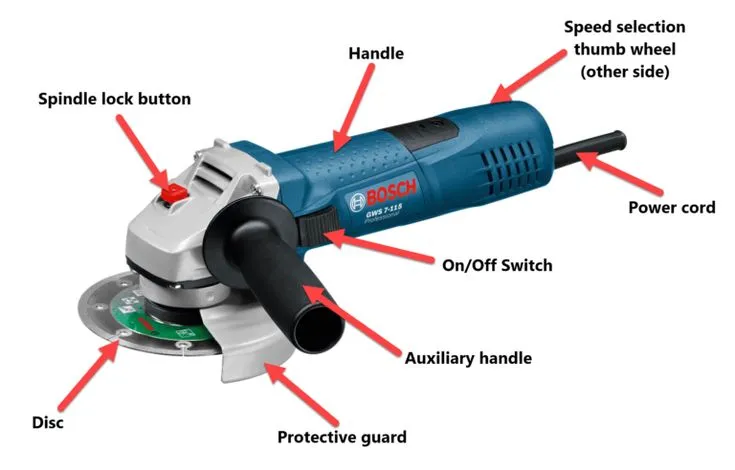
Ever seen sparks flying from your power drill? That’s brushed motors in action. These workhorses power everything from household tools to industrial machinery, but how do they actually work?
Brushed motors are electric motors that use carbon brushes to transfer electrical current from the stationary part to the rotating component. They feature a simple design with four main parts: stator, armature, commutator, and carbon brushes that enable efficient electrical transfer with minimal sparking.
If you’ve ever wondered about the technology behind your power tools or why some motors last longer than others, you’re in the right place. Let’s explore the fascinating world of brushed motors and discover what makes them tick.
What Is A Carbon Brush?
Have you noticed your power tools losing power over time? The culprit might be worn carbon brushes. These small components play a crucial role, but many users don’t understand their importance until problems arise.
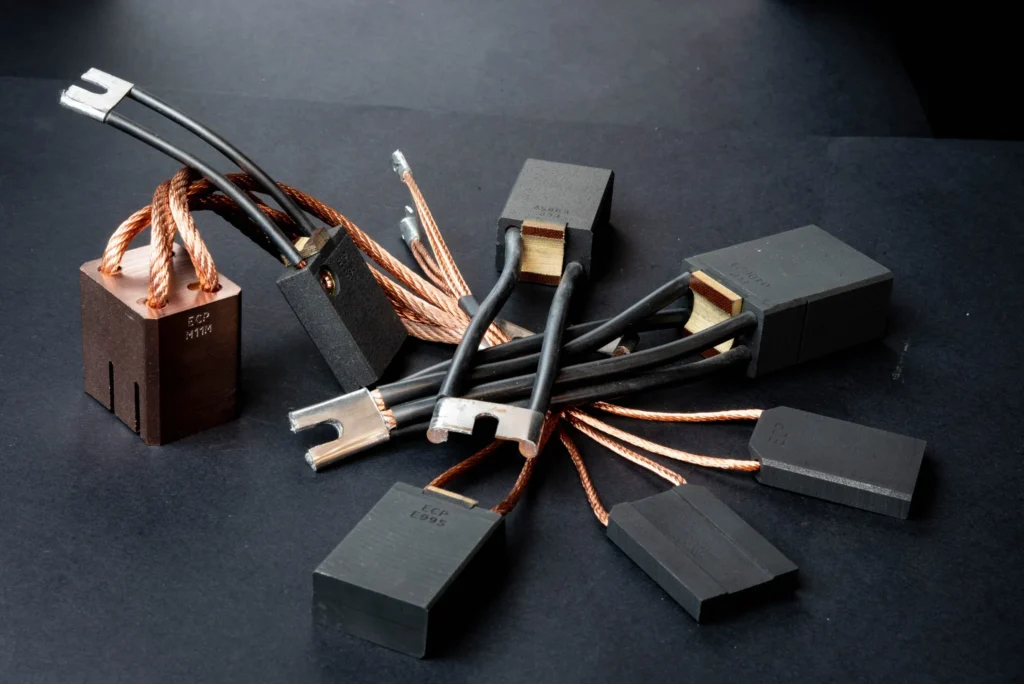
A carbon brush is a sliding electrical contact that transfers current from the stationary part of a motor to its rotating components. Made from carbon-based materials, these components ensure smooth electrical transmission while minimizing sparking during the commutation process in brushed motors.
Carbon brushes might seem simple, but they’re engineering marvels designed for a specific purpose. These components come in various shapes and compositions, each tailored to particular applications and operating conditions.
Types of Carbon Brushes
Carbon brushes aren’t one-size-fits-all components. They come from five distinct brush-grade families:
- Carbon Graphite – Basic brushes with good conductivity and self-lubricating properties
- Electrographite – Heat-treated for improved performance in high-speed applications
- Metal Graphite – Contains metal powders for enhanced conductivity
- Silver Graphite – Premium brushes with excellent conductivity for specialized applications
- Carbon Composite – Blended materials for specific performance characteristics
The manufacturing process varies depending on the type. Some brushes undergo high-temperature treatment to improve their properties, while others incorporate metal particles to enhance electrical conductivity.
Brush Construction
Most carbon brushes include:
| Component | Function |
|---|---|
| Carbon Block | Main contact surface that transfers electricity |
| Shunt Wire | Flexible copper wire that connects the brush to the power source |
| Terminal | Connection point for the electrical circuit |
| Spring | Maintains constant pressure against the commutator |
The dimensions and specifications of carbon brushes vary by manufacturer and application. They’re typically measured in millimeters or inches, specifying thickness, depth, and width. When replacing brushes, matching these specifications exactly is crucial for proper operation.
Brushes’ Operating Parameters
Is your motor overheating or wearing out too quickly? Understanding brush operating parameters could solve your problems. These critical factors determine performance, efficiency, and lifespan of your motor.
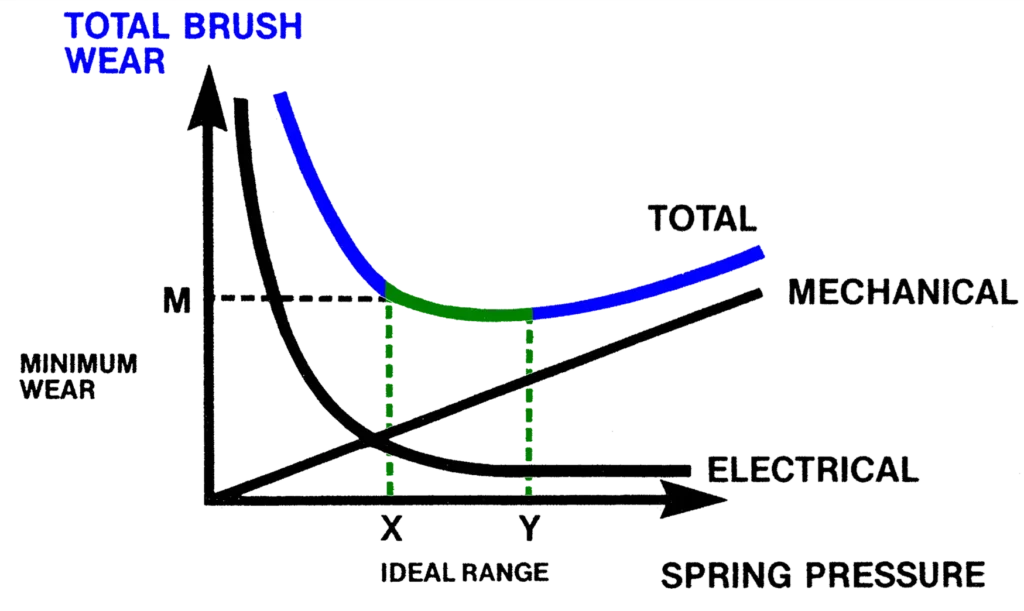
Carbon brushes require careful consideration of three parameter types to function properly: mechanical (pressure, friction), electrical (current density, voltage drop), and physical/chemical (temperature, humidity). These parameters must be balanced to ensure optimal power transmission and minimal wear.
The science behind carbon brush operation involves a complex interplay of forces and conditions. Let’s break down these parameters to understand how they affect motor performance.
Mechanical Parameters
Mechanical factors directly impact brush wear and commutator condition:
- Spring Pressure – Too little pressure causes poor contact and arcing; too much accelerates wear
- Friction Coefficient – Affects heat generation and wear rate
- Surface Finish – Smoother commutator surfaces reduce friction and improve contact
- Vibration – Excessive vibration causes uneven wear and potential brush damage
Electrical Parameters
Electrical characteristics determine power transfer efficiency:
- Current Density – Amount of current per unit area of brush surface
- Contact Resistance – Affects voltage drop and heat generation
- Commutation Quality – Impacts sparking and electromagnetic interference
- Voltage Gradient – Distribution of voltage across the brush surface
Physical and Chemical Parameters
Environmental conditions significantly influence brush performance:
- Operating Temperature – Affects brush hardness and wear characteristics
- Humidity – Impacts film formation on the commutator
- Atmospheric Contaminants – Can interfere with proper contact
- Altitude – Air density changes affect cooling and arc suppression
Optimizing these parameters requires careful selection of brush materials and designs for specific applications. For portable power tools, manufacturers typically provide compatible brushes designed to balance these factors for optimal performance.
What is a Brushed DC motor?
Wondering why some tools feel more powerful than others? The type of motor inside makes all the difference. Brushed DC motors have been workhorses for decades, but what exactly are they?
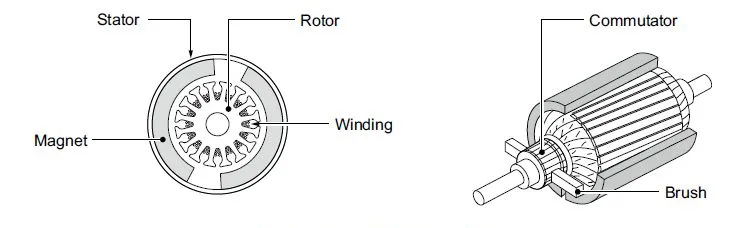
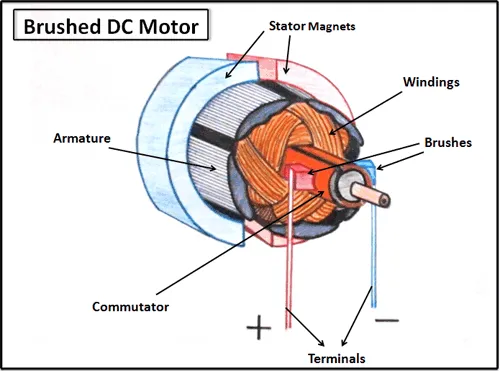
A brushed DC motor is an electric motor that converts electrical energy into mechanical rotation using a commutator-brush system. It consists of a stator (stationary housing with permanent magnets), an armature (rotating electromagnet), a commutator (switching mechanism), and carbon brushes (electrical contacts).
Though increasingly replaced by brushless alternatives in many applications, brushed DC motors remain relevant due to their simplicity and cost-effectiveness. Understanding their components helps appreciate their ingenious design.
Key Components of Brushed DC Motors
The Stator
The stator forms the stationary outer structure of the motor. In most brushed DC motors, the stator contains permanent magnets that create a fixed magnetic field. These magnets are typically arranged in a circular pattern around the interior of the motor housing.
The strength of these magnets directly affects the motor’s power output. Higher-quality motors often use stronger neodymium magnets, while more economical models might use ferrite magnets.
The Armature
The armature is the heart of a brushed DC motor. This rotating component consists of:
- Iron Core – Usually laminated to reduce eddy currents
- Wire Windings – Copper wire wrapped around the core to form electromagnets
- Shaft – The central axle that transfers rotational force
When current flows through the armature windings, they become electromagnets that interact with the stator’s magnetic field, creating rotational force.
The Commutator
The commutator is a split ring attached to the armature shaft. It serves as a rotary electrical switch that reverses current direction in the armature windings at precisely the right moment to maintain rotation.
The commutator segments are typically made of copper and are insulated from each other. As the armature rotates, different commutator segments contact the brushes, changing which armature coils receive current.
The Brushes
Carbon brushes maintain constant contact with the rotating commutator, delivering electrical power to the armature. They’re spring-loaded to ensure consistent pressure against the commutator surface.
The quality and composition of these brushes significantly impact motor performance and lifespan. Higher-quality brushes offer better conductivity and longer wear life.
What Do Brushes Do in Electric Motors?
Have you ever wondered why your power tools eventually need brush replacement? Understanding the crucial role these small components play helps explain why they’re the first parts to wear out in many motors.
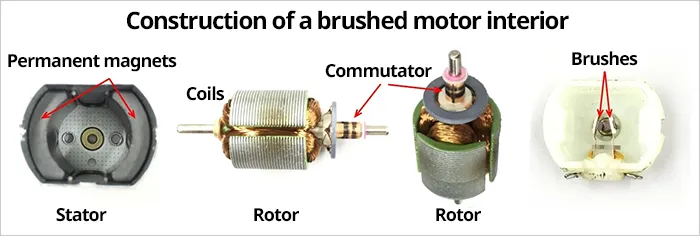
In brushed DC motors, carbon brushes serve as electrical conductors that transfer power from the stationary power source to the rotating armature. They maintain contact with the commutator, enabling the critical polarity shifts that keep the motor spinning by reversing electromagnetic polarity every half-rotation.
The interaction between brushes and commutator creates the fundamental operating principle of brushed motors. This seemingly simple mechanism enables controlled rotational motion that powers countless devices.
The Electrical Transfer Process
When electricity flows into a brushed motor, it follows this path:
- Current enters through the positive brush
- Electricity flows through the commutator to the armature windings
- The energized windings create an electromagnetic field
- This field interacts with the stator’s permanent magnets
- The resulting force causes the armature to rotate
- As rotation occurs, different commutator segments contact the brushes
- This changes which armature coils receive current
- The process continues, maintaining rotation
The Commutation Cycle
The genius of brushed motors lies in their self-switching mechanism:
| Rotation Position | What Happens |
|---|---|
| Starting position | Current flows through specific armature coils |
| 90° rotation | Maximum torque position as magnetic fields align |
| 180° rotation | Commutator switches current direction in coils |
| 270° rotation | Second maximum torque position |
| 360° rotation | Cycle repeats |
This continuous switching process, called commutation, creates a pulsing torque that drives the motor. The brushes make this possible by maintaining electrical contact throughout rotation while allowing the commutator to switch current direction.
Brush Wear Mechanism
The sliding contact between brushes and commutator inevitably causes wear:
- Friction between surfaces generates heat
- Microscopic arcing occurs during commutation
- Carbon particles gradually wear away
- Eventually, brushes become too short to maintain proper contact
- At this point, replacement becomes necessary
This wear process is normal and expected. Quality brushes are designed to wear gradually while protecting the more expensive commutator from damage.
Why ‘Carbon’ Brushes Are Used in Electric Motors?
Ever wondered why carbon is the material of choice for motor brushes? It’s not just tradition – there’s solid science behind this selection that affects everything from motor performance to maintenance costs.
Carbon brushes are used in electric motors because of their excellent electrical conductivity combined with self-lubricating properties. They provide low friction, good thermal conductivity, and form a protective film on the commutator surface, reducing wear while efficiently transferring electrical current.
The unique properties of carbon make it ideal for this challenging application where electrical and mechanical requirements must be balanced perfectly.
Electrical Conductivity
Carbon brushes offer an optimal balance of conductivity characteristics:
- Sufficient Conductivity – While not as conductive as pure metals, carbon provides adequate electrical transfer
- Controlled Resistance – Helps limit current spikes during commutation
- Consistent Performance – Maintains relatively stable electrical properties throughout its lifespan
- Arc Suppression – Carbon’s properties help minimize harmful arcing during commutation
Mechanical Advantages
The mechanical properties of carbon brushes provide significant benefits:
- Self-Lubrication – Carbon naturally forms a lubricating film, reducing friction
- Low Friction Coefficient – Minimizes wear on both brush and commutator
- Softness – Carbon wears preferentially, protecting the more expensive commutator
- Structural Integrity – Maintains shape under pressure and heat
- Vibration Resistance – Absorbs minor vibrations without losing contact
Thermal Properties
Heat management is crucial in motor operation:
- Good Thermal Conductivity – Helps dissipate heat from the contact area
- Temperature Stability – Maintains properties across a wide temperature range
- Low Thermal Expansion – Minimizes dimensional changes during heating/cooling cycles
Economic Factors
Practical considerations also favor carbon brushes:
| Factor | Benefit |
|---|---|
| Cost-Effective | Relatively inexpensive to manufacture |
| Replaceable | Easy to change when worn |
| Customizable | Can be formulated for specific applications |
| Long-Lasting | Good wear characteristics in proper applications |
The combination of these properties makes carbon the ideal material for motor brushes, offering the best balance of electrical performance, mechanical durability, and economic practicality.
Do AC Motors Use Brushes?
Confused about which motors have brushes? You’re not alone. Many people assume all electric motors use similar components, but AC motors work on completely different principles.
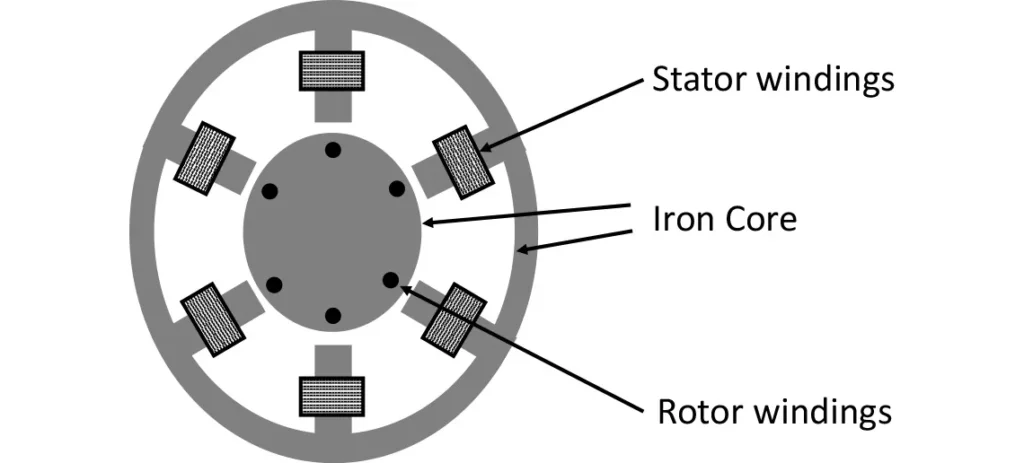
No, AC motors do not use brushes. Unlike brushed DC motors that require physical contacts to transfer power to the rotating armature, AC motors operate using electromagnetic induction principles. They create a rotating magnetic field in the stator that interacts with the rotor, eliminating the need for brushes.
This fundamental difference in design gives AC motors distinct advantages and applications compared to their brushed counterparts.
How AC Motors Work Without Brushes
AC motors eliminate the need for brushes through clever electromagnetic design:
- Rotating Magnetic Field – AC power naturally creates a rotating magnetic field in the stator
- Induced Currents – This field induces electrical currents in the rotor
- Magnetic Interaction – The induced currents create magnetic fields that interact with the stator field
- Continuous Rotation – This interaction produces torque without any physical electrical contacts
Types of Brushless AC Motors
Several AC motor designs operate without brushes:
Induction Motors
The most common type of AC motor uses electromagnetic induction:
- Squirrel Cage Rotor – Simple, robust design with conductive bars
- Wound Rotor – More complex design with wire windings
- Applications – Industrial machinery, pumps, fans, household appliances
Synchronous Motors
These motors maintain exact speed relative to frequency:
- Permanent Magnet – Uses magnets in the rotor
- Reluctance – Uses specially shaped rotors
- Applications – Precise timing applications, clocks, record players
Advantages of Brushless AC Design
The absence of brushes provides significant benefits:
- Maintenance-Free Operation – No brush replacement needed
- Longer Lifespan – No wear components in the power transfer system
- No Sparking – Safer in hazardous environments
- Reduced EMI – Less electromagnetic interference
- Higher Efficiency – No power lost to brush friction or contact resistance
This fundamental difference in design philosophy explains why AC motors dominate in many industrial and household applications where maintenance concerns and efficiency are paramount.
What’s the Difference Between Brushless and Brushed DC Motors?
Shopping for power tools and confused by “brushless” marketing? Understanding the key differences helps you make smarter purchases and know exactly what you’re paying for.
The main difference between brushed and brushless motors lies in their commutation method. Brushed motors use physical carbon contacts and a mechanical commutator for switching, while brushless motors employ electronic controllers with position sensors to energize coils sequentially without physical contacts.
These fundamental design differences create cascading effects on performance, maintenance, and applications that are worth understanding before investing in tools or equipment.
Design Differences
The structural differences between these motor types are significant:
| Feature | Brushed DC Motor | Brushless DC Motor |
|---|---|---|
| Commutation | Mechanical (brushes & commutator) | Electronic (controller & sensors) |
| Rotor | Electromagnet (windings) | Permanent magnet |
| Stator | Permanent magnet | Electromagnet (windings) |
| Wiring | Two wires | Three or more wires |
| Controller | Simple or none needed | Required electronic controller |
Operational Differences
These design variations create notable performance differences:
Brushed Motor Operation
- DC power enters through the brushes
- Current flows to the armature via the commutator
- The armature becomes an electromagnet
- Interaction with stator magnets creates rotation
- The commutator switches current direction as needed
- Physical contact causes wear over time
Brushless Motor Operation
- A controller monitors rotor position via sensors
- The controller energizes stator coils in sequence
- This creates a rotating magnetic field
- The permanent magnet rotor follows this field
- The controller continuously adjusts timing
- No physical contacts means minimal wear
Performance Comparison
The operational differences translate to performance variations:
- Efficiency – Brushless motors are 20-30% more efficient
- Power-to-Weight Ratio – Brushless motors deliver more power for their size
- Speed Range – Brushless motors operate effectively at higher speeds
- Thermal Performance – Brushless motors run cooler due to better heat dissipation
- Noise Level – Brushless motors operate more quietly without brush friction
- Lifespan – Brushless motors typically last 3-5 times longer
These differences explain why professional-grade tools increasingly feature brushless technology, despite the higher initial cost.
Which Is Better?
Trying to decide between brushed and brushless tools? This common question doesn’t have a simple answer – it depends on your specific needs, budget, and how you’ll use the equipment.
Generally, brushless motors outperform brushed motors in efficiency, lifespan, and performance. They run cooler, quieter, and require less maintenance, making them superior for professional and heavy-duty applications. However, brushed motors remain valuable for budget-conscious users and applications where simplicity is preferred.
The “better” choice depends on weighing various factors against your specific requirements. Let’s examine the key considerations to help you make an informed decision.
Performance Comparison
When evaluating pure performance metrics, clear patterns emerge:
| Performance Factor | Brushed Motors | Brushless Motors | Winner |
|---|---|---|---|
| Efficiency | 75-80% | 85-90%+ | Brushless |
| Power-to-Weight | Good | Excellent | Brushless |
| Speed Control | Limited | Precise | Brushless |
| Torque Consistency | Variable | Consistent | Brushless |
| Heat Generation | Higher | Lower | Brushless |
| Noise Level | Louder | Quieter | Brushless |
Practical Considerations
Beyond raw performance, practical factors often influence purchasing decisions:
Cost Analysis
- Initial Investment
- Brushed tools typically cost 30-50% less upfront
- Brushless technology commands a premium price
- Lifetime Cost
- Brushed motors require periodic brush replacement
- Brushless motors have lower maintenance costs
- Energy efficiency savings with brushless (especially in high-use scenarios)
Application Suitability
Different scenarios favor different motor types:
- Ideal for Brushed Motors:
- Occasional home use
- Budget-constrained projects
- Simple applications with fixed speeds
- Harsh environments where simple repairs are preferred
- Ideal for Brushless Motors:
- Professional daily use
- Applications requiring precise speed control
- Battery-powered tools (efficiency extends runtime)
- Situations where maintenance downtime is costly
Making the Right Choice
The decision framework should consider:
- Usage Frequency – Higher usage favors brushless
- Budget Constraints – Tighter budgets may necessitate brushed
- Performance Requirements – Demanding applications need brushless
- Maintenance Capability – Consider your ability to replace brushes
- Power Source – Battery-powered tools benefit more from brushless efficiency
For many users, a mixed approach works best – brushless for frequently used core tools and brushed for occasional-use specialty tools.
Why Are Brushless Motors More Expensive Than Brushed Motors?
Sticker shock when comparing similar brushed and brushless tools? Understanding the factors behind the price difference helps determine if the premium is worth paying for your specific needs.
Brushless motors cost more than brushed motors because they require sophisticated electronic controllers, position sensors, and more complex manufacturing processes. The additional components, advanced magnets, and precision assembly increase production costs, while their superior performance justifies the premium pricing.
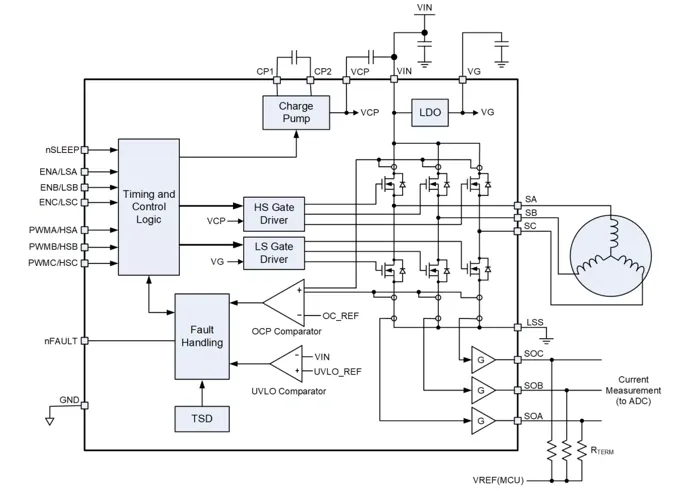
The price difference isn’t arbitrary – it reflects genuine technological advantages and manufacturing complexities that deliver tangible benefits.
Component Cost Factors
Several specific components contribute to the higher cost:
- Electronic Speed Controllers (ESC)
- Sophisticated microprocessors monitor and adjust motor operation
- Complex circuitry manages power delivery
- Programming development costs are incorporated
- Position Sensors
- Hall effect sensors or encoders track rotor position
- Precise manufacturing and calibration required
- Additional wiring and connections needed
- Magnet Quality
- Brushless motors often use higher-grade neodymium magnets
- These materials cost significantly more than ferrite alternatives
- Precise magnetization patterns require specialized equipment
Manufacturing Complexity
The production process itself is more demanding:
- Winding Precision
- Stator windings must be precisely positioned
- Automated winding equipment costs more
- Quality control standards are higher
- Assembly Challenges
- More components mean more assembly steps
- Tighter tolerances must be maintained
- Additional testing procedures required
- Integration Requirements
- Controller and motor must be perfectly matched
- Software development and testing add costs
- Thermal management is more sophisticated
Economic Factors
Market dynamics also influence pricing:
| Factor | Impact on Price |
|---|---|
| Production Volume | Brushed motors benefit from higher production volumes |
| Manufacturing Maturity | Brushed technology has decades of optimization |
| Patent Considerations | Some brushless technologies have licensing costs |
| Market Positioning | Brushless often positioned as premium products |
Despite these higher costs, the performance benefits often justify the investment for professionals and serious enthusiasts who will benefit from the efficiency, durability, and performance advantages.
Do Brush Motors Have More Torque?
Heard that brushed motors deliver more torque? This common misconception needs clarification – the torque story is more nuanced than many realize.
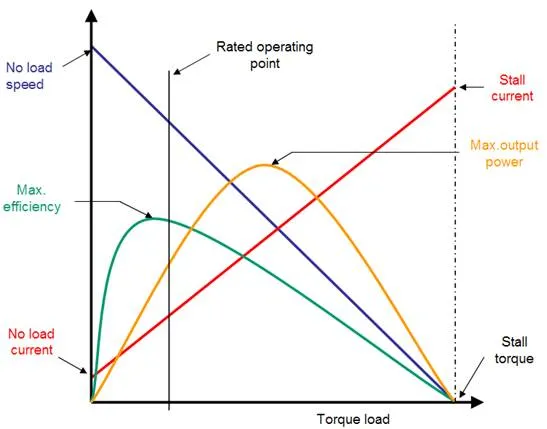
Brushed motors can provide excellent initial torque due to their simple commutation system, but they typically don’t maintain high torque at increased speeds. As brush friction increases with speed, available torque decreases, making them less efficient than brushless DC motors for applications requiring sustained high torque.
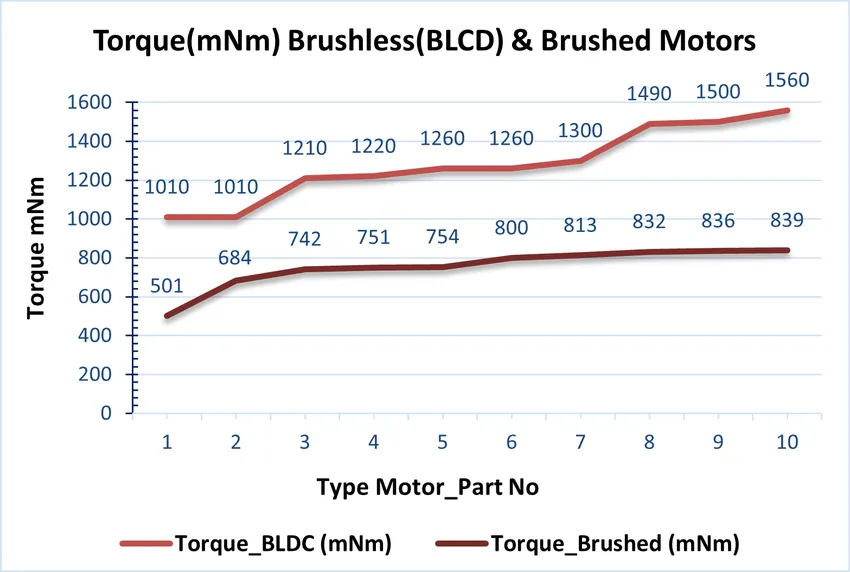
Understanding the torque characteristics of different motor types helps select the right option for specific applications where starting power or continuous force is more important.
Torque Characteristics Comparison
Different motor designs create different torque profiles:
Brushed DC Motor Torque Profile
- Starting Torque – Excellent initial torque from standstill
- Torque Curve – Decreases as speed increases
- Peak Efficiency – Occurs at moderate speeds
- Limiting Factors – Brush friction, heat, commutation efficiency
Brushless DC Motor Torque Profile
- Starting Torque – Good to excellent (depending on controller)
- Torque Curve – More consistent across speed range
- Peak Efficiency – Maintained across a wider speed range
- Limiting Factors – Controller capabilities, thermal limits
Factors Affecting Torque Performance
Several elements influence actual torque delivery:
- Motor Size and Design
- Larger motors generally produce more torque
- Winding configuration affects torque characteristics
- Magnet strength directly impacts torque potential
- Power Supply
- Higher voltage generally enables higher torque
- Current capacity limits maximum torque
- Battery-powered applications face additional constraints
- Control Systems
- Brushed motors with simple controls may deliver more predictable low-speed torque
- Advanced brushless controllers can optimize torque delivery
- Sensor feedback improves brushless torque management
Application-Specific Considerations
Different scenarios favor different motor types:
| Application | Torque Requirement | Better Motor Type |
|---|---|---|
| Heavy lifting | High starting torque | Either type (sized appropriately) |
| Constant speed under load | Consistent torque | Brushless |
| Frequent start/stop | Good starting torque | Brushed (economy) or Brushless (performance) |
| Variable speed precision | Predictable torque at all speeds | Brushless |
The perception that brushed motors have “more torque” likely stems from their excellent starting torque characteristics in simple applications. However, for sustained high-torque operations, properly designed brushless systems typically deliver superior performance.
How to Make A Brushed Motor Faster?
Want more speed from your brushed motor without buying new equipment? Several proven techniques can boost performance, though each comes with tradeoffs you should understand.
To make a brushed motor faster, you can adjust the operating voltage, modify the magnetic field strength, or use a specialized motor controller. These methods increase speed by altering the electrical input or optimizing the motor’s electromagnetic interaction, though they may affect torque and motor lifespan.
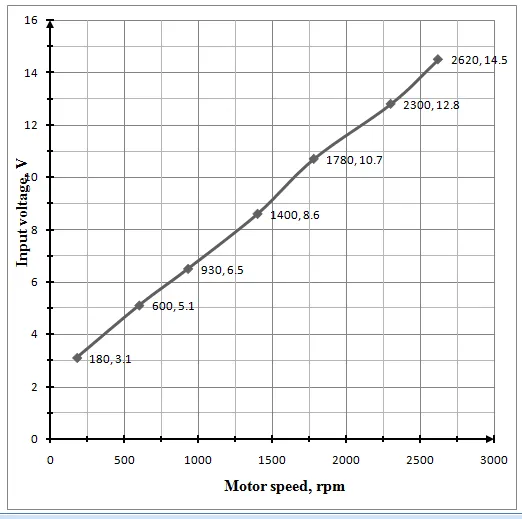
Enhancing motor speed requires understanding the fundamental principles that govern motor operation and the practical limitations of different modification approaches.
Voltage Adjustment Methods
Increasing voltage is the most straightforward approach:
- Higher Voltage Power Supply
- Direct method to increase speed
- Each motor has a maximum safe voltage
- Exceeding ratings can cause overheating
- Battery Upgrades
- Moving from 12V to 18V battery systems
- Using higher-capacity batteries that maintain voltage under load
- Ensuring connectors can handle increased current
- Voltage Regulation
- Using adjustable power supplies
- Implementing voltage boosters
- Monitoring temperature to prevent damage
Magnetic Field Modifications
Altering the magnetic field can improve performance:
- Magnet Upgrades
- Replacing ferrite magnets with stronger neodymium versions
- Requires careful matching to motor characteristics
- May require professional installation
- Field Winding Adjustments
- For wound field motors, modifying field current
- Reduces field strength to increase speed
- Typically reduces available torque
Controller-Based Enhancements
Modern electronic solutions offer precision:
- Pulse Width Modulation (PWM)
- Rapidly switching power on/off
- Allows precise speed control
- Can optimize performance across operating range
- Advanced Brushed Motor Controllers
- Provide soft-start capabilities
- Offer overcurrent protection
- Some include feedback systems for optimization
- Timing Adjustments
- Modifying brush timing for higher speed operation
- Requires mechanical skill
- Can significantly impact motor efficiency
Performance Tradeoffs
Speed modifications come with important considerations:
| Modification | Speed Increase | Effect on Torque | Effect on Lifespan |
|---|---|---|---|
| Voltage Increase | Significant | Potential increase | Reduced |
| Magnetic Modification | Moderate | Usually decreased | Minimal impact |
| Controller Optimization | Moderate | Can be optimized | Can be improved |
When implementing speed enhancements, monitoring temperature is crucial. Excessive heat is the primary enemy of motor longevity, and most speed-increasing modifications generate additional heat that must be managed.
Benefits of a Brushed Motors DC
Wondering why brushed motors remain popular despite newer technologies? Their enduring advantages make them the right choice for many applications, even in today’s high-tech world.
Brushed DC motors offer significant benefits including low construction costs, simple rebuilding for extended lifespan, basic control requirements, and excellent performance in harsh environments. Their straightforward design makes them ideal for applications where simplicity, reliability, and cost-effectiveness are prioritized.
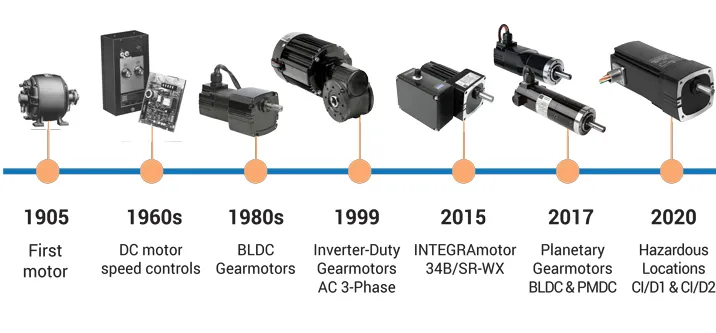
These practical advantages explain why brushed motors continue to thrive in many sectors despite the growing popularity of brushless alternatives.
Economic Advantages
Cost considerations often favor brushed motors:
- Lower Initial Investment
- Simpler construction means lower manufacturing costs
- Fewer components reduce assembly complexity
- Mature technology benefits from economies of scale
- Reduced Control Costs
- Simple or no controllers required for basic operation
- Standard power supplies work without modification
- Less expensive driver circuits when control is needed
- Maintenance Economics
- Replaceable brushes extend motor life at minimal cost
- Rebuilding is often economical compared to replacement
- Parts standardization across many models
Technical Advantages
Several performance characteristics benefit specific applications:
- Operational Simplicity
- Direct connection to DC power sources
- Predictable speed-torque characteristics
- Straightforward troubleshooting and repair
- Environmental Adaptability
- Excellent performance in extreme temperatures
- Less sensitive to dust and contaminants
- Can be sealed for harsh environment operation
- Application Flexibility
- Easy to reverse direction
- Simple speed control with voltage adjustment
- Good starting torque characteristics
Practical Applications Where Brushed Motors Excel
Certain scenarios particularly benefit from brushed motor characteristics:
| Application | Why Brushed Motors Work Well |
|---|---|
| Power Tools | Good torque, simple design, easy maintenance |
| Automotive Systems | Reliability in variable conditions, cost-effectiveness |
| Household Appliances | Simple control needs, economic production |
| Industrial Equipment | Rebuilding capability, predictable performance |
| Hobby Applications | Affordable, easy to modify and repair |
Longevity Considerations
With proper care, brushed motors can provide excellent service life:
- Maintenance Practices
- Regular brush inspection and replacement
- Commutator cleaning and maintenance
- Proper lubrication of bearings
- Rebuild Potential
- Many brushed motors can be rebuilt multiple times
- Often only brushes and bearings need replacement
- Armature rewinding possible for larger motors
These benefits explain why brushed motors remain the preferred choice in many applications where their specific advantages align with operational requirements and economic constraints.
The Drawbacks of a Brushed Motors DC
Before investing in brushed motor technology, it’s important to understand their limitations. These drawbacks might make alternative technologies more suitable for certain applications.
Brushed DC motors have several disadvantages including lower motor efficiency compared to brushless alternatives, significant electrical noise generation, and mechanical wear of brushes and commutators. These limitations affect performance, maintenance requirements, and suitability for sensitive or continuous-duty applications.
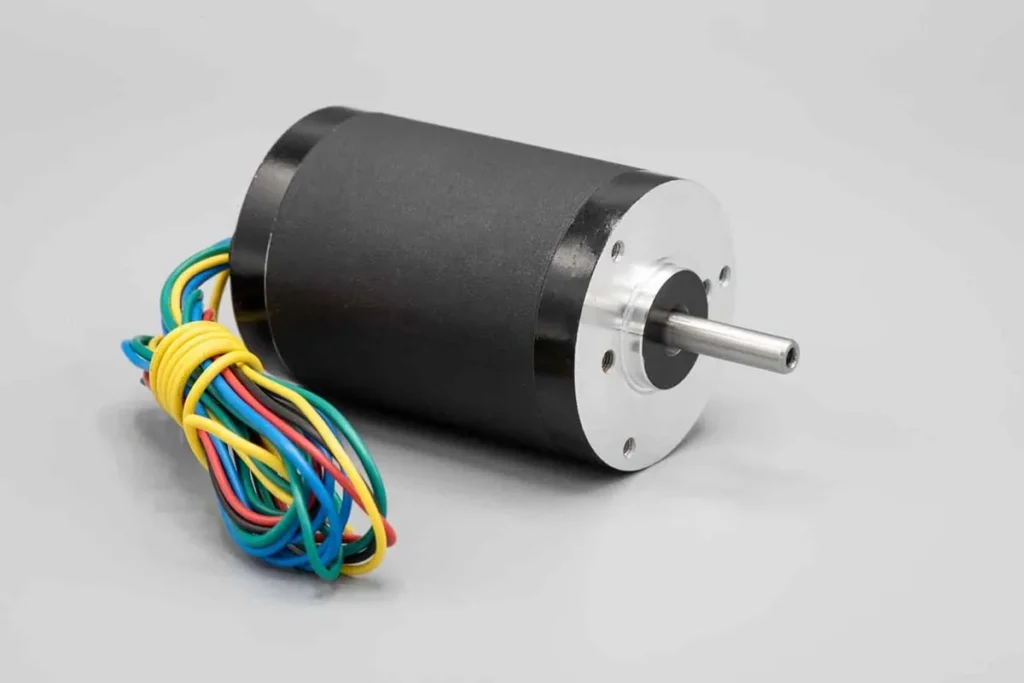
Understanding these drawbacks helps make informed decisions about motor selection for specific applications, balancing the benefits against potential challenges.
Efficiency Limitations
Energy conversion inefficiencies impact performance:
- Power Loss Mechanisms
- Friction between brushes and commutator wastes energy as heat
- Contact resistance creates additional power loss
- Eddy currents in the armature core reduce efficiency
- Efficiency Metrics
- Typical efficiency ranges from 75-80% (compared to 85-90%+ for brushless)
- Efficiency decreases further at very high or low speeds
- Performance degrades as brushes wear
- Thermal Consequences
- More heat generation requires better cooling
- Temperature rise limits continuous operation
- Thermal cycling accelerates insulation breakdown
Electrical and Electromagnetic Issues
Brushed motors create significant electrical disturbances:
- Electromagnetic Interference (EMI)
- Sparking at brush-commutator interface generates radio frequency interference
- Can disrupt nearby electronic equipment
- May require additional shielding in sensitive applications
- Electrical Noise
- Voltage spikes during commutation
- Current ripple affects power supply requirements
- Can cause control system instability
- Arcing Concerns
- Limits use in hazardous environments
- Accelerates brush and commutator wear
- Creates ozone and carbon dust
Mechanical Wear Considerations
Physical contact between components creates inevitable wear:
| Component | Wear Mechanism | Consequence |
|---|---|---|
| Carbon Brushes | Friction against commutator | Require periodic replacement |
| Commutator | Surface wear, pitting from arcing | Eventually needs resurfacing |
| Springs | Fatigue from constant pressure | May lose tension over time |
| Bearings | Normal rotation wear | Eventual replacement needed |
Application Limitations
These drawbacks make brushed motors less suitable for certain uses:
- Problematic Applications
- Continuous high-speed operation
- Environments requiring minimal maintenance
- Applications sensitive to electrical noise
- Hazardous locations where sparking is dangerous
- Lifetime Constraints
- Brush life typically limits motor lifetime
- Higher maintenance requirements increase total cost of ownership
- Downtime for maintenance impacts productivity
Despite these limitations, brushed motors remain viable for many applications where their advantages outweigh these drawbacks or where mitigation strategies can address the most significant concerns.
DC Motor Brush Replacement
Is your motor losing power or making unusual noises? Brush replacement might be the solution. This maintenance task extends motor life and restores performance when done correctly.
DC motor brush replacement is a maintenance procedure that extends motor lifespan by installing new carbon brushes when the original ones wear down. The process involves safely disconnecting power, accessing the brush assembly, removing worn brushes, installing new ones, and testing the motor for proper operation.
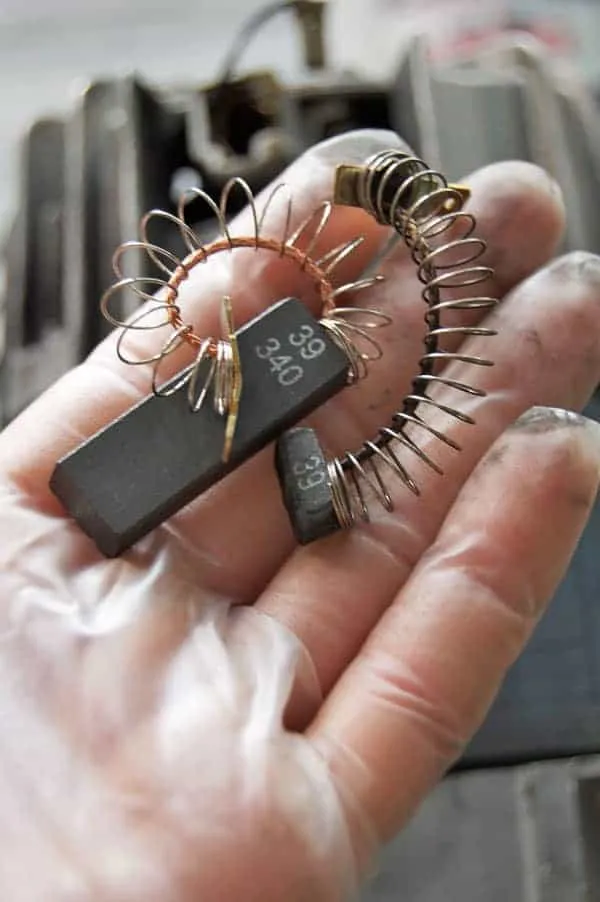
Proper brush replacement requires attention to detail but can be accomplished by following a systematic approach. Let’s explore the complete process.
Safety Precautions
Before beginning any motor maintenance:
- Power Disconnection
- Unplug equipment or disconnect from power source
- Allow capacitors to discharge
- Verify absence of voltage with a multimeter
- Personal Protection
- Wear safety glasses to protect from carbon dust
- Use insulated tools when appropriate
- Work in a well-ventilated area
- Equipment Protection
- Work on a clean surface
- Avoid static discharge around electronic components
- Prevent small parts from falling into motor housing
Step-by-Step Replacement Process
1. Accessing the Brushes
Different motors have different access methods:
- Tool Motors – Usually have access caps or plates
- Automotive Motors – May require partial disassembly
- Industrial Motors – Often have dedicated brush holders with external access
2. Brush Removal
Careful extraction prevents damage:
- Note the position and orientation of existing brushes
- Disconnect any wires attached to the brush assembly
- Release the spring tension mechanism
- Gently remove the old brush from its holder
- Inspect the brush holder for damage or contamination
3. Inspection and Cleaning
Before installing new brushes:
- Examine the commutator surface for:
- Uneven wear
- Scoring or grooves
- Discoloration
- Clean the commutator if necessary using:
- Fine sandpaper (600 grit or finer)
- Commutator cleaning stone
- Electrical contact cleaner
- Check brush holders for:
- Free movement
- Proper spring tension
- Clean contact surfaces
4. New Brush Installation
Proper installation ensures optimal performance:
- Verify new brushes match specifications of originals
- Insert brushes into holders in correct orientation
- Reconnect any wires to the brush assembly
- Ensure springs apply proper pressure
- Verify brushes move freely in holders
5. Testing and Break-In
After replacement:
- Rotate motor shaft by hand to check for free movement
- Reassemble any removed components
- Connect to power and test at low speed
- Allow for break-in period (typically 1-2 hours of operation)
- Monitor for unusual noise or performance issues
Following these steps ensures successful brush replacement, extending motor life and maintaining optimal performance. For motors with specialized brush assemblies, consulting the manufacturer’s documentation is recommended.
Uses of Brushed DC Motor
Surprised by how many devices still use brushed motors? Despite newer technologies, these versatile workhorses continue to power countless applications across diverse industries.
Brushed DC motors are widely used in home appliances, automotive systems, and industrial applications due to their adjustable torque-to-speed ratio, simple control, and cost-effectiveness. Their straightforward design makes them ideal for applications requiring reliable operation, easy maintenance, and good starting torque.
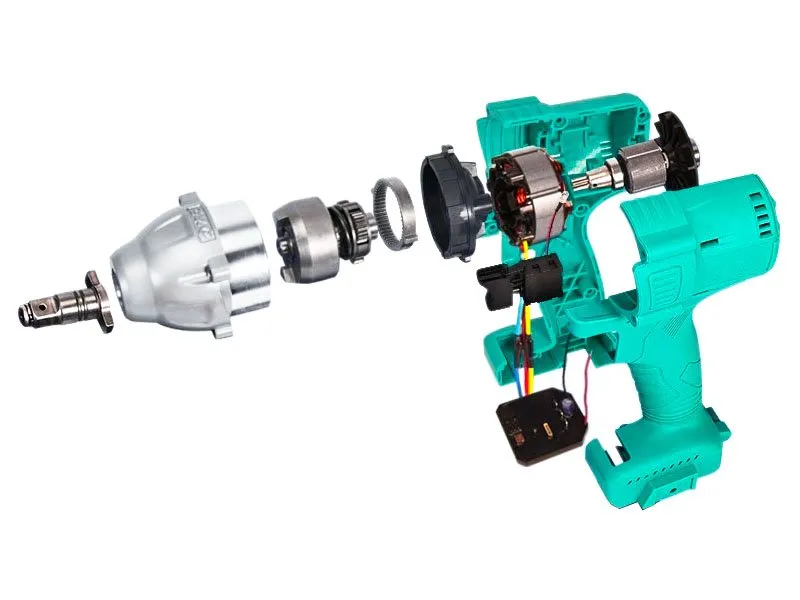
The continued popularity of brushed motors stems from their practical advantages in specific applications where their characteristics align perfectly with operational requirements.
Household Applications
Many common home devices rely on brushed motors:
- Power Tools
- Drills, sanders, and circular saws
- Vacuum cleaners and blowers
- Kitchen appliances like mixers and blenders
- Home Automation
- Window openers and blinds
- Garage door openers
- Small pumps and fans
- Personal Care Devices
- Hair dryers
- Electric shavers
- Massage devices
Automotive Applications
Vehicles contain numerous brushed motors:
| Vehicle System | Brushed Motor Applications |
|---|---|
| Convenience Features | Power windows, seat adjusters, mirror controls |
| Comfort Systems | HVAC blowers, sunroof mechanisms |
| Functional Components | Windshield wipers, fuel pumps, cooling fans |
| Starting System | Starter motors in many vehicles |
Industrial Applications
Manufacturing and processing rely heavily on brushed motors:
- Material Handling
- Conveyor systems
- Lifting mechanisms
- Positioning equipment
- Processing Equipment
- Mixers and agitators
- Pumps and compressors
- Packaging machinery
- Specialized Applications
- Variable speed drives
- Tension control systems
- Applications requiring precise torque control
Hobby and Educational Uses
Brushed motors are popular in recreational contexts:
- Model Building
- Remote-controlled cars and boats
- Model trains
- Simple robotics
- Educational Projects
- STEM education kits
- Motor control experiments
- Demonstration models
The versatility of brushed motors, combined with their adjustable torque-to-speed characteristics, ensures their continued relevance across these diverse applications. Their simplicity makes them particularly valuable in educational contexts, where their operating principles are easier to demonstrate and understand compared to more complex motor technologies.
Conclusion
Brushed motors remain essential components in countless applications despite advancing technology. Their simple design, cost-effectiveness, and reliable performance make them ideal choices for many uses, from household tools to industrial equipment. While brushless alternatives offer advantages in efficiency and maintenance, brushed motors continue to provide the perfect balance of performance, price, and practicality for many everyday applications.
FAQ
What is the lifespan of brushed motors?
Brushed motors typically last 1,000 to 3,000 hours of operation before requiring brush replacement. Actual lifespan depends on operating conditions, quality of construction, and maintenance practices.
Can I replace carbon brushes myself?
Yes, you can replace carbon brushes yourself in most motors. The process requires basic tools, attention to safety precautions, and following the correct procedure for your specific motor model.
Why do brushed motors spark?
Brushed motors spark because of the momentary breaking of electrical contact as the commutator segments pass under the brushes. This arcing is normal but excessive sparking indicates worn brushes or commutator problems.
Are brushed motors waterproof?
Standard brushed motors are not waterproof. However, specially designed sealed brushed motors are available for marine applications and other wet environments where water resistance is required.
How do I know when to replace motor brushes?
Replace motor brushes when performance decreases, the motor makes unusual noises, sparking becomes excessive, or when brushes have worn down to about 1/3 of their original length.
Can brushed motors be used in hazardous environments?
Specially designed explosion-proof brushed motors can be used in hazardous environments. Standard brushed motors are not suitable due to sparking at the commutator-brush interface.
Why are some brushed motors more expensive than others?
Price differences in brushed motors reflect variations in quality, materials, manufacturing precision, and design features. Higher-quality motors use better magnets, windings, bearings, and brushes for improved performance and longevity.
How do I increase the torque of a brushed motor?
Increase brushed motor torque by using a gear reduction system, increasing the current supply (within motor ratings), or selecting a motor with different winding characteristics designed for higher torque output.